
U.S
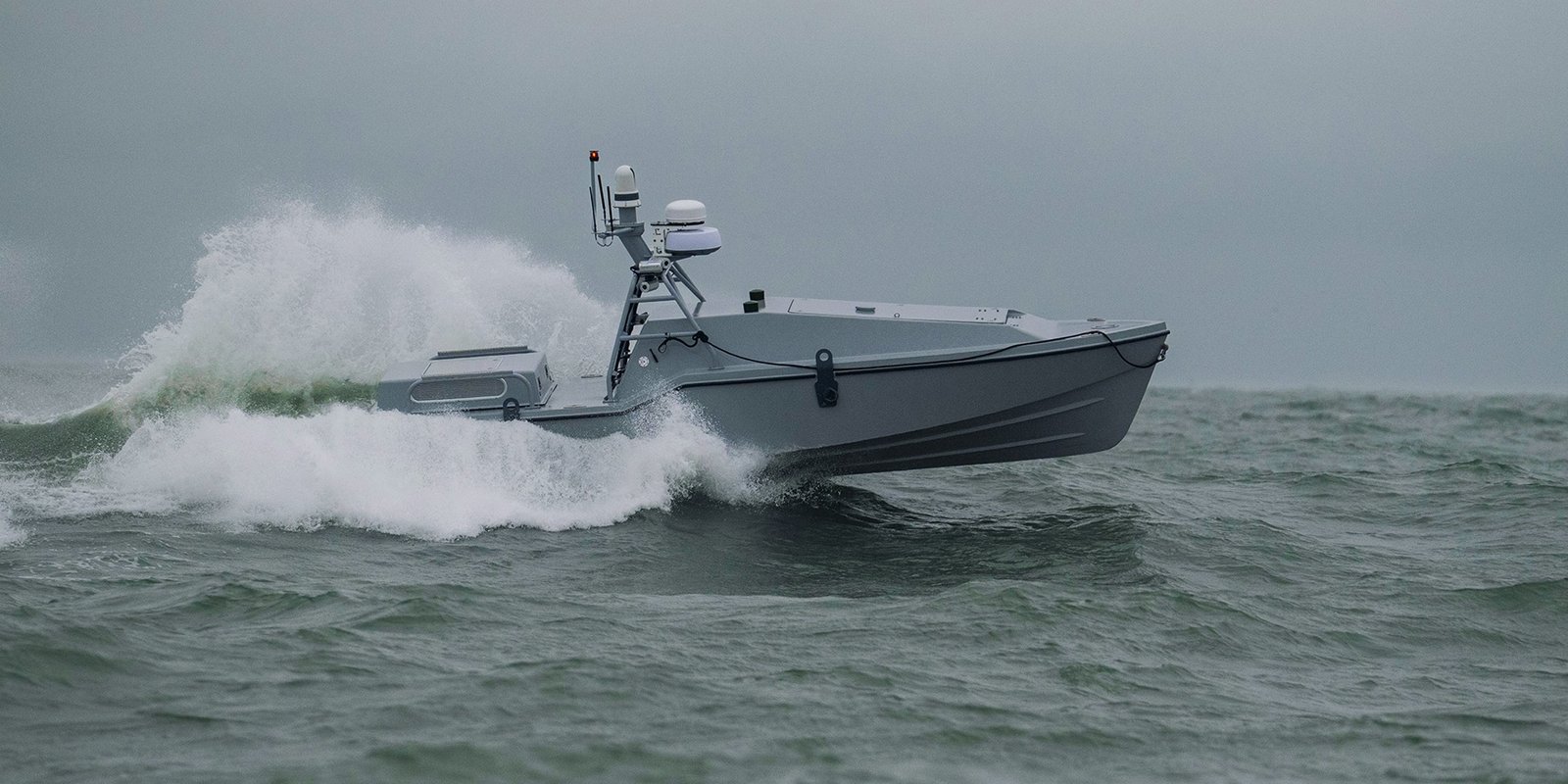
WASHINGTON, — The U.S. Department of Defense’s Defense Innovation Unit (DIU) has launched Sprint 2 of its Suitable Warfighting Adaptive Payloads–Unmanned Surface Vessel (SWAP-USV) challenge, seeking production-ready unmanned boats capable of detecting, tracking, and defeating airborne threats at sea. Conducted with the Direct Reporting Portfolio Manager for Unmanned Systems, the 12-month competition focuses on affordable maritime air defense against Group 1–3 unmanned aerial systems (UAS), explosive unmanned surface vessels, and rotary-wing aircraft. Selected systems must be suitable for potential forward operational fielding within 120 days. Operational Requirements and Weapons Participating vessels must meet these minimum requirements: Cruising speed: At least 10 knots (18.5 km/h). Operational range: At least 200 nautical miles (370 km). Engagement distance: Beyond 3 nautical miles (5.6 km). Systems must provide 360-degree detection and tracking of aerial and surface threats using sensors designed to handle clutter. They must support autonomous navigation, station-keeping, collision avoidance, and an open, modular command-and-control architecture compatible with Project AVO (Autonomous Vehicle Orchestrator). Weapons must remain under human supervision, with human-in-the-loop controls for arming, firing, and aborting engagements. Potential weapons include the AGM-114L Longbow Hellfire, AGM-179 Joint Air-to-Ground Missile (JAGM), Advanced Precision Kill Weapon System (APKWS), Stinger missiles, stabilized machine guns of 7.62 mm caliber or greater, high-power lasers, and other mature kinetic effectors already in production. Proposals must integrate the vessel, launcher, sensors, and weapon as a complete system. Platform-only and weapon-only submissions will not be considered. Desired features include continuous surveillance, low operating and logistics costs, transport by truck, container or cargo aircraft, GPS-independent navigation, and the ability to engage surface or land targets. Rapid field rearming by a small crew is also preferred. The competition is open to U.S. and international companies, individually or in teams. Applicants must demonstrate proven integration, past performance, active production lines, and the ability to increase production. The challenge prioritizes lifecycle cost-effectiveness, including production, operating hours, and maintenance, rather than standalone platform performance. Timeline and Funding Sprint 2 offers up to $40 million in prize funding. Pitch decks of up to 15 slides are due by November 29 or 30, 2026, according to the reports provided. Selected teams must be ready to demonstrate integrated systems within 30 days of down-selection. In-water testing is planned for early 2027, beginning with company-run demonstrations and followed by a government evaluation lasting approximately three weeks at Joint Expeditionary Base Little Creek, Virginia. Operators will assess performance against drone and rotary-wing targets in jammed environments, including simulated and live-fire engagements. The overall SWAP-USV challenge has up to $100 million across three sprints: $40 million each for Sprints 1 and 2 and up to $20 million for Sprint 3. An additional $200 million is budgeted for potential follow-on prototype or production agreements through other transaction authority. Sprint 1 began in July 2026, focusing on USVs integrated with aerial drones for strike missions and battle-damage assessment. Its testing is expected in fall 2026, while Sprint 3 is scheduled to begin in spring 2027. The program aims to accelerate the fielding of mature, affordable maritime defense systems rather than fund extensive new development. Final requirements and potential follow-on agreements remain subject to testing and evaluation.
Read More → Posted on 2026-10-26 16:37:24
Space & Technology
HAWTHORNE, California, — SpaceX has secured $40 billion in debt financing to purchase artificial intelligence chips, according to CEO Elon Musk, who warned that hundreds of specialized AI infrastructure companies could face financial difficulties as lending conditions tighten. In posts on the social media platform X on October 25, 2026, Musk said SpaceX had closed the financing package for graphics processing units (GPUs), primarily from Nvidia, expected to arrive in the first and second quarters of 2027. He described the financing as mostly callable debt and said it would not be a major factor in the company's current-quarter finances. Musk attributed SpaceX's ability to secure the funding to its investment-grade credit rating and established revenue from its Starlink satellite internet service and commercial rocket launch business. “SpaceX closed $40B of debt for GPUs, but we’re investment grade and have Starlink & launch revenue,” he wrote. Reports earlier in October indicated that SpaceX was discussing a financing package with banks and asset managers that could include approximately $10 billion in bank loans and $30 billion in investment-grade debt. However, the final pricing, participating lenders, interest rates, and collateral arrangements have not been publicly disclosed. Musk Warns of Neocloud Industry Consolidation Musk also warned that specialized AI computing providers, commonly known as neocloud companies, face increasing financial pressure. These businesses invest in large GPU clusters and data centres, then rent computing capacity to artificial intelligence developers. According to Musk, debt markets have almost entirely stopped providing financing to companies without substantial revenue outside their AI data-centre operations. He predicted that many of the more than 200 neocloud providers would fail or be absorbed through industry consolidation. “That means the 200+ neoclouds are going to see guppy-level death and consolidation. Some will make it through, but not many,” Musk said. He also ruled out SpaceX acquiring struggling neocloud companies, describing such acquisitions as “pointless.” Musk's comments were followed by declines in premarket trading in shares of several publicly traded AI infrastructure companies, including CoreWeave, Nebius Group, and IREN. Reported early losses ranged from 3.3% to more than 5%. Neocloud operators face substantial upfront costs for GPUs, data centres, and electricity infrastructure. Higher borrowing costs and stricter lending requirements can make it more difficult for companies that depend heavily on debt to finance expansion before generating sufficient customer revenue. SpaceX Expands Its AI Computing Business The financing supports SpaceX's broader expansion into artificial intelligence following its acquisition of Musk's xAI in February 2026. The company is developing computing infrastructure to support its Grok AI models and provide computing capacity to external customers, including Anthropic. SpaceX's third-quarter financial results highlight the scale of its investment. For the quarter ended September 30, 2026, the company reported $14.58 billion in total revenue, representing a 161% increase from the same period a year earlier. Its Super Intelligence AI segment generated approximately $7.56 billion in revenue, while connectivity and space operations contributed $5.2 billion and $1.8 billion, respectively, according to the reported figures. SpaceX also recorded $19.6 billion in capital expenditure during the quarter. Chief Financial Officer Bret Johnsen said the company expects capital expenditure to reach $35 billion to $40 billion in the fourth quarter of 2026. The company has also emphasized maintaining its investment-grade credit rating as it expands its computing capacity. The $40 billion financing highlights the difference between SpaceX's diversified business model and AI infrastructure providers that depend more heavily on external borrowing. Revenue from satellite communications and rocket launches gives SpaceX additional sources of income to support its AI investments, while the tightening credit market could make expansion more difficult for companies focused primarily on renting AI computing capacity.
Read More → Posted on 2026-10-26 16:26:06
World
TEHRAN, — Senior officials from Saudi Arabia, Pakistan and Turkey held high-level talks with Iranian leaders in Tehran on Monday to discuss regional security, diplomatic mediation and efforts to prevent further escalation amid rising tensions between the United States and Iran. The visiting officials include Saudi Defence Minister Prince Khalid bin Salman, Pakistani Army Chief Field Marshal Asim Munir, and Turkish intelligence chief Ibrahim Kalin. They are meeting Iranian President Masoud Pezeshkian and senior security official Mohsen Rezaei, identified in the supplied reports as secretary of Iran’s Supreme National Security Council. Iranian deputy security official Ali Bagheri Kani confirmed the visit, describing the discussions as consultations on regional security and “endogenous security” in West Asia, referring to a security framework led by regional countries. A senior Iranian official said Pakistan initiated the meeting during Munir’s visit to Tehran the previous week. Saudi Deputy Minister for Public Diplomacy Rayed Krimly said the visit forms part of efforts by the Mecca Pact countries to reduce tensions, promote dialogue and support diplomatic solutions, including mediation efforts by Pakistan and Qatar. Mecca Pact and Mutual Defence Commitments Saudi Arabia, Pakistan and Turkey signed the Mecca Joint Defence Agreement, also known as the Mecca Pact or Makkah Defence Alliance, in August 2026. Under the agreement, an armed attack on one member is treated as an attack on all, with members committed to addressing threats to each other’s territorial integrity, sovereignty and borders. Earlier in October, the pact’s Strategic-Political and Defence Committee held an emergency meeting in Riyadh, agreeing on collective deterrence measures and steps toward the rapid deployment of agreed military forces and capabilities to Saudi Arabia. Houthi Attacks and Regional Security The talks follow recent waves of missile and drone attacks claimed by Yemen’s Iran-aligned Houthi rebels against Saudi Arabia. Saudi forces have intercepted recent attacks, raising concerns about the security of infrastructure, energy facilities and shipping routes. Iranian Foreign Ministry spokesperson Esmaeil Baghaei said the discussions would also address Israeli policies, developments in the Palestinian territories and Lebanon, and the effects of US and Israeli military actions involving Iran. The meeting comes amid heightened US-Iran tensions and reports that both sides have considered further military options. Pakistan and Qatar have been involved in mediation efforts aimed at reducing the risk of a wider conflict. Reports of Possible Iranian Integration Reports citing Israeli intelligence assessments suggest that Pakistan has been mediating on behalf of Saudi Arabia to explore the possibility of bringing Iran into the Mecca Alliance. However, no formal agreement to include Iran has been announced. Israeli officials have reportedly raised concerns that closer Saudi-Iranian cooperation could accelerate Saudi Arabia’s ballistic missile programme. Claims that Iranian technology transfers could eventually enable Saudi Arabia to develop nuclear warheads remain reported concerns, not a confirmed outcome of the talks. Ali Vaez, deputy director of the Middle East and North Africa Program at the International Crisis Group, described the visit as an attempt to encourage compromise before further escalation, adding that its success would depend on a credible proposal to bridge differences between Washington and Tehran. Iranian officials have presented the discussions as a step toward a regional security framework independent of foreign intervention. The Tehran meeting marks the first high-level contact between Iran and all three Mecca Pact members since the recent intensification of attacks on Saudi Arabia. No detailed outcomes from Monday’s meetings had been publicly released at the time of reporting.
Read More → Posted on 2026-10-26 16:20:50
Europe
GULF OF OMAN, — The French Navy tested a laser anti-drone system aboard its flagship aircraft carrier, Charles de Gaulle, between June 4 and 8, 2026, during the La Fayette 26 mission. The trial took place on the flight deck while the carrier was docked in the Gulf of Oman. According to the French Navy’s official magazine, Cols Bleus, as reported by Zone Militaire, a joint team from the Centre for Military Aviation Expertise (CEAM) in Mont-de-Marsan and the ground-based air defense squadron (EDSA) in Istres conducted the trial. Installing the equipment took approximately four hours. The setup included a laser emitter, camera turret, LIDAR sensor, cooling unit, and control console. Although Cols Bleus described the event as the Navy’s first shipboard test of the system, published photographs matched the equipment to the HELMA-P demonstrator, developed by French company CILAS. The experimental deployment aimed to assess the laser’s performance in maritime conditions, with no indication that the system remained permanently installed aboard the carrier. HELMA-P Capabilities HELMA-P (High Energy Laser for Multiple Applications – Power) is a directed-energy weapon designed to counter small drones and other asymmetric threats. Development began in 2017 under France’s L2AD (Laser de lutte antidrone) program, involving CILAS and Ariane Group. The system weighs approximately 80 kilograms and uses a 2-kilowatt laser combined with automated target detection and tracking. It focuses a laser beam on a target to heat and damage its structure, sensors, or electronics, potentially neutralizing small drones within seconds. Its reported engagement range is approximately one kilometre, depending on conditions. It does not require conventional ammunition for each engagement but needs electrical power and cooling. Previous Testing and Operational Use HELMA-P completed ground trials in 2020 and 2021 at the DGA missile testing centre in Biscarrosse. In June 2023, the French Navy tested it aboard the Horizon-class air-defense frigate Forbin in the Mediterranean Sea. The French Ministry of the Armed Forces subsequently highlighted its accuracy and effectiveness in maritime conditions. The system was also deployed for anti-drone security during the Paris 2024 Olympic Games. The latest trial aboard Charles de Gaulle provided another opportunity to evaluate its potential for naval protection against unmanned aerial vehicles. La Fayette 26 and International Developments The La Fayette 26 mission centred on the Charles de Gaulle carrier strike group and lasted 166 days, ending on July 11, 2026, when the carrier returned to Toulon. Operations covered the North Atlantic, Baltic Sea, Mediterranean, and areas near the Gulf of Oman. Other navies are also testing laser weapons for ship protection. In October 2025, the U.S. Navy conducted live-fire trials of AeroVironment’s palletized LOCUST laser weapon system aboard the aircraft carrier USS George H.W. Bush, reportedly engaging multiple drone targets in the same region. France is continuing directed-energy weapon development, including the SYDERAL demonstrator, intended for broader short-range air-defense roles in the coming years. The HELMA-P trial forms part of the Navy’s ongoing evaluation of laser weapons for countering small drones and other asymmetric aerial threats.
Read More → Posted on 2026-10-26 16:09:23
India
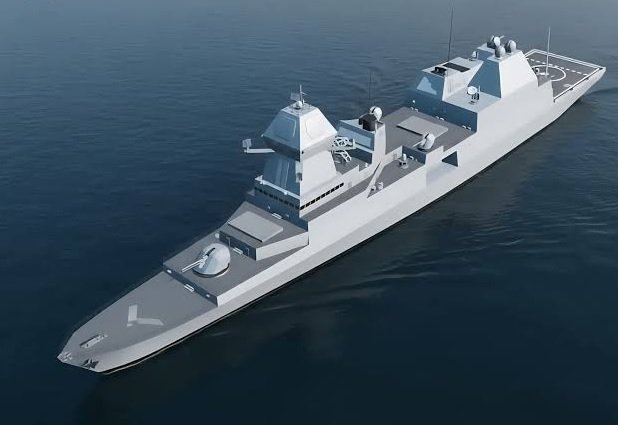
NEW DELHI, — The Defence Acquisition Council (DAC) is set to consider the Indian Navy’s Project 18/Project 18A Next Generation Destroyer (NGD) programme at its meeting on October 26, 2026. The project, estimated to cost around ₹75,000 crore, envisages the indigenous construction of eight to ten advanced destroyers to strengthen India’s maritime capabilities. The proposed warships are expected to displace approximately 13,000–14,000 tonnes, making them significantly larger than the Navy’s existing Visakhapatnam-class destroyers, which displace roughly 7,400–8,000 tonnes. The larger platforms are intended to accommodate advanced weapons and sensor systems. Weapons, Propulsion and Development Timeline Conceptual plans indicate that the destroyers could feature up to 144 vertical launch system (VLS) cells for missiles, including BrahMos, long-range land-attack cruise missiles and advanced surface-to-air weapons. Proposed technologies also include hybrid propulsion or Integrated Electric Propulsion (IEP) and upgraded X-band and S-band active-array radar systems. The programme places strong emphasis on Aatmanirbhar Bharat, with construction planned at Indian shipyards and a high level of indigenous content envisaged for the ships and their systems. The project remains at the conceptual stage. Detailed design work could take four to five years, followed by an estimated eight to ten years for construction, with the first destroyers expected to enter service in the mid-2030s. The DAC, chaired by Defence Minister Rajnath Singh, includes senior defence and military officials. If the proposal receives approval, it would be granted an Acceptance of Necessity (AoN), an early step in the procurement process, before moving to the Cabinet Committee on Security (CCS) for final approval. Project 18A forms part of the Indian Navy’s long-term effort to modernise its surface fleet and develop more capable warships for future operational requirements.
Read More → Posted on 2026-10-26 15:53:03
India
NEW DELHI, — The Indian Navy has inducted autonomous armed unmanned surface vessels developed by Pune-based Sagar Defence Engineering to strengthen coastal surveillance and maritime security. The platform is being showcased at Swavlamban 2026, held on October 26–27 at the Manekshaw Centre in New Delhi. Developed under the government’s iDEX SPRINT initiative, the vessels have an endurance of 48 hours and an operational range of approximately 350 kilometres. Their equipment includes a 12.7 mm remote-controlled gun, drones, marine radar, thermal cameras, and navigation systems incorporating ISRO’s NaVIC and GPS. The boats can operate independently or coordinate with up to 11 other vessels, allowing a 12-boat swarm to share sensor data and conduct surveillance through a single command station. They can reportedly reach speeds above 50 knots, carry payloads exceeding 2,000 kg, and feature a self-righting mechanism. The Indian Navy ordered 12 autonomous fast interceptor crafts. The first two were reportedly delivered earlier in 2026 for the Western Naval Command. Ten boats are intended for coastal operations, while two are allocated for deployment at Pangong Lake in Ladakh by the Indian Army. Earlier trials included an autonomous journey of approximately 1,500 kilometres from Mumbai to Thoothukudi. The vessels are designed to support surveillance, rapid response, and selected combat missions while reducing risks to personnel and advancing India’s indigenous defence capabilities.
Read More → Posted on 2026-10-26 15:44:49
World
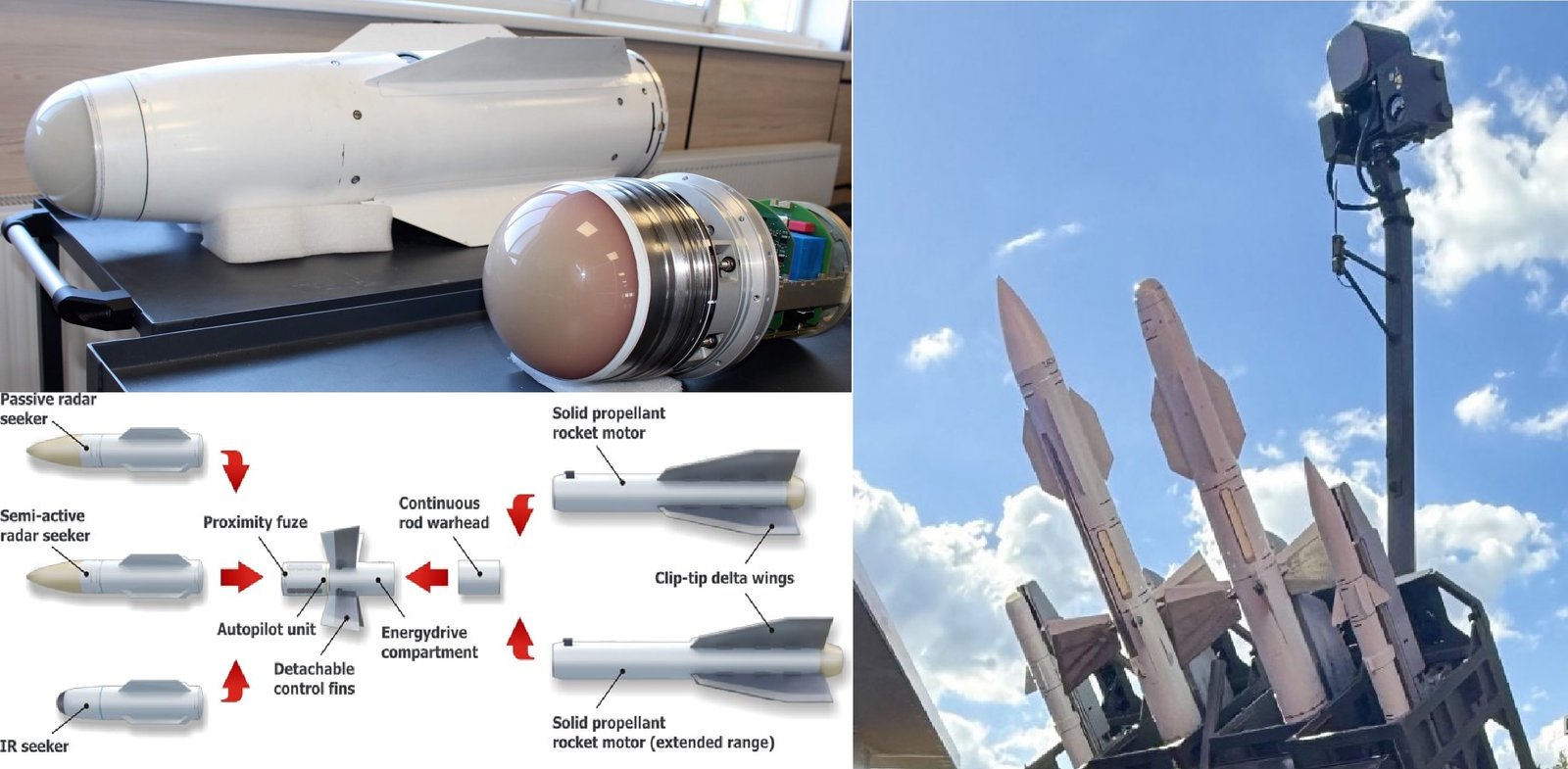
KYIV, — Ukrainian developers have released new details about the R-287T and R-287R missiles, designed for the multi-caliber Shershen air defense system. Both missiles are based on the Soviet-era R-27 air-to-air missile family and feature updated guidance systems intended to engage modern aerial threats. The Shershen system was presented internationally at the World Defense Show in Riyadh earlier in 2026. However, it has not secured procurement funding and remains a development project. No decision has been made to order it for Ukraine’s armed forces. R-287T: Infrared-Guided Missile The R-287T features the GSN-203T infrared seeker, also known as GS-203T, developed by Ukrainian defense company Radioniks in 2020. Unlike older R-27T and R-27ET seekers, which use single-channel photodetectors, the GSN-203T uses an imaging array to detect a target’s thermal signature and improve resistance to electronic countermeasures. Its reported target acquisition range is at least 30 km head-on and more than 100 km when pursuing a target from behind. The missile is identifiable by its rounded nose cone. R-287R: Active Radar Guidance The R-287R uses a Ukrainian-developed active radar seeker, replacing the semi-active radar guidance used by the older R-27R. Semi-active guidance requires the launching platform to illuminate the target continuously until interception. Active radar homing allows the missile to track targets independently after launch, reducing the workload on air defense crews. The R-287T and R-287R use the modular design of the R-27 family, which allows the homing system to be replaced. Ukraine is applying this approach to modernize existing missiles for ground-based air defense against unmanned aerial vehicles (UAVs) and cruise missiles. Shershen System Capabilities The Shershen features an open architecture designed to use different Soviet-era and Western missiles without major system modifications. Compatible types include the R-27, R-73, AIM-9, and AIM-132. The system is designed to engage aircraft, helicopters, cruise missiles, UAVs, and other aerodynamic targets. Its radar can detect targets at up to 85 km and track 24 targets simultaneously. The reported engagement range is 1.5–25 km, depending on the missile, with an engagement altitude of 20 metres to 10 km. It can engage targets travelling at up to 1,000 m/s and fire at up to six targets simultaneously, with a reported single-shot kill probability of 0.75. The system comprises a combat control vehicle, detection and tracking radar, and launchers. Its components have reportedly completed testing and received codification. Funding and Procurement Status Despite progress in testing, Shershen has not received procurement funding, and no order has been approved for Ukraine’s armed forces. Preliminary estimates put its export price at €150–170 million, with production timelines expected to be shorter than those of some Western air defense systems currently facing high demand. Development of the associated missiles and seekers continues as Ukraine works to expand its domestic guided-munition capabilities. Until funding is secured, the ground-based Shershen system and its new missiles remain part of the development programme rather than an operationally fielded capability.
Read More → Posted on 2026-10-26 14:33:17
Europe
NYNÄSHAMN, Sweden, — Sweden’s Armed Forces have partnered with maritime technology company Saildrone to provide continuous maritime surveillance across the Baltic Sea, including Sweden’s territorial waters and exclusive economic zone. The year-long mission involves four 10-metre Voyager unmanned surface vehicles (USVs) under the Nordic Defence Cooperation (NORDEFCO) framework. The Swedish Defence Materiel Administration (FMV) signed the framework agreement on behalf of the Swedish Armed Forces. Each vessel is contracted to operate for 360 days, providing a total of 1,440 vehicle-days of surveillance. The agreement also allows additional vessels to be added. The vessels have supported Swedish naval surveillance since October 2026. Surveillance as a Managed Service Sweden is purchasing surveillance data as a managed service rather than buying the vessels. Saildrone maintains, deploys and tasks the USVs, while the Swedish Navy defines mission requirements and receives data continuously. “This is fundamentally not about four unmanned vessels, but about access to sustained intelligence collection at sea,” said Johan Wahren, project manager at FMV. The Voyager vessels use wind, solar and backup diesel power and carry cameras, radar and other sensors to detect and track ships, including those not transmitting Automatic Identification System (AIS) signals. Sensor data can be compared with AIS transmissions to check vessel identities and positions. The vehicles also have loudspeakers to issue warnings to approaching craft. Saildrone personnel monitor the vessels while the Navy assigns tasks and receives information around the clock. First NORDEFCO Deployment and NATO Support The deployment is the first national use of Saildrone USVs under NORDEFCO, which supports defence cooperation among Nordic countries, including Denmark, Finland, Iceland, Norway and Sweden. The framework allows participating nations to access maritime surveillance services while defining their own missions, with further national deployments expected. The fleet will also support NATO’s Task Force X Baltic, which emerged from Operation Baltic Sentry to improve maritime surveillance and protect critical underwater infrastructure following subsea cable incidents in 2024 and 2025. Around 4,500 vessels travel through the Baltic Sea daily, increasing the importance of maritime situational awareness. Deployment and Previous Operational Results At an FMV media day on October 22, 2026, in Nynäshamn, Sweden’s Defence Minister Pål Jonson, Saildrone European Managing Director Robert Kleist, Justice Minister Gunnar Strömmer and Swedish Navy operations chief Commander Paula Wallenburg attended the presentation. Three USVs were already operating in the Baltic Sea, and the fourth was dispatched during the event. During a previous six-month mission supporting the Royal Danish Navy, four Voyager USVs achieved 92% fleet uptime, travelled more than 20,000 nautical miles and detected over 170,000 unique vessels. Saildrone has established its European headquarters in Copenhagen and registered four Voyager USVs under the Danish national flag. The company plans to register additional vessels in the coming weeks, establishing a flag-state framework for international operations. It has also conducted missions in the High North, Southern Ocean and Middle East, providing maritime surveillance services to navies and law enforcement agencies. The Swedish deployment is intended to maintain continuous monitoring of Baltic Sea traffic while freeing crewed naval ships for other operations and supporting regional maritime security.
Read More → Posted on 2026-10-26 14:17:45
U.S
AUCKLAND, New Zealand, — U.S. Space Command has blocked the New Zealand Defence Force from releasing operational records concerning a Pentagon-funded space-surveillance hub at Royal New Zealand Air Force Base Auckland. According to Radio New Zealand (RNZ), the decision comes as the wider surveillance network has expanded its support for military operations related to the conflict involving Iran. The Auckland facility is one of three global centres in the Joint Commercial Operations (JCO) network, alongside hubs in the United States and Britain. It coordinates surveillance across the Pacific using a continuous, follow-the-sun operating schedule. The network uses unclassified commercial radar, optical and radio-frequency data to track satellites, rocket launches, space debris and potential threats in orbit. Its information supports space safety, collision avoidance, space-weather monitoring and military intelligence shared with U.S. commands and allied governments. New Zealand Withholds Requested Records RNZ requested mission notices covering March to September 2026 and weekly reports from the previous two years under New Zealand's Official Information Act. The New Zealand Defence Force declined the request, stating that it could not release JCO documents without U.S. approval and advising RNZ to use the U.S. Freedom of Information Act. New Zealand maintains sovereignty over the facility and says its activities remain within the responsibilities approved by Cabinet. The country joined the arrangement in 2023, following a U.S. invitation, to support space-domain awareness and satellite protection using unclassified commercial data. The Auckland hub operates within the Royal New Zealand Air Force's No. 62 Squadron, the country's first dedicated space unit. The United States funds commercial sensor data, while New Zealand supplies personnel. Its contribution cost approximately NZ$180,000 in a recent year. Russian, Iranian and Chinese Space Activity Previously released records showed that, in February 2026, the Auckland hub coordinated tracking of a Russian launch carrying two satellites for Iran, described as weather and television broadcasting satellites. The notices identified the launch as a milestone for Iran's space programme and an example of continuing Russian-Iranian cooperation. The hub also tracked a Chinese military satellite that month. The JCO network has since incorporated sensors aboard SpaceX's Starlink satellites. An April report said this significantly increased successful tracking of Chinese and Russian launches. The network combines data from multiple commercial providers in a shared repository used by dozens of countries. JCO Expands Electronic Warfare Monitoring JCO head Barbara Golf said the U.S. Central Command requested broader electromagnetic-spectrum monitoring after Operation Epic Fury began on February 28, 2026. The network used this capability to identify sources of electronic attacks, including Iranian jammers capable of disrupting drones. Golf said the capability had expanded rapidly and that the U.S. Space Force intended to extend these warning functions to all six U.S. geographic combatant commands over the following year. Electromagnetic-spectrum operations were added to the JCO approximately two years earlier and had previously supported events such as the Paris Olympics. The New Zealand Defence Force said it was aware of these expanded activities but had not extended its own contribution beyond the Cabinet-approved remit. Any further expansion of the Auckland hub's role would require government permission. The facility has also trained operators from partner countries participating in the Pacific cell. Direct Involvement in Iran Operations Unclear Although the wider JCO network has supported monitoring related to combat operations involving Iran, the extent of the Auckland hub's direct involvement remains unclear. Military officials have not confirmed whether the New Zealand facility helped identify electronic attacks or counter-drone jamming in the Middle East. The case highlights the growing use of commercial satellite data in military intelligence and operational planning, as well as the challenges of balancing allied defense cooperation with national sovereignty and transparency laws.
Read More → Posted on 2026-10-26 14:08:10
Europe
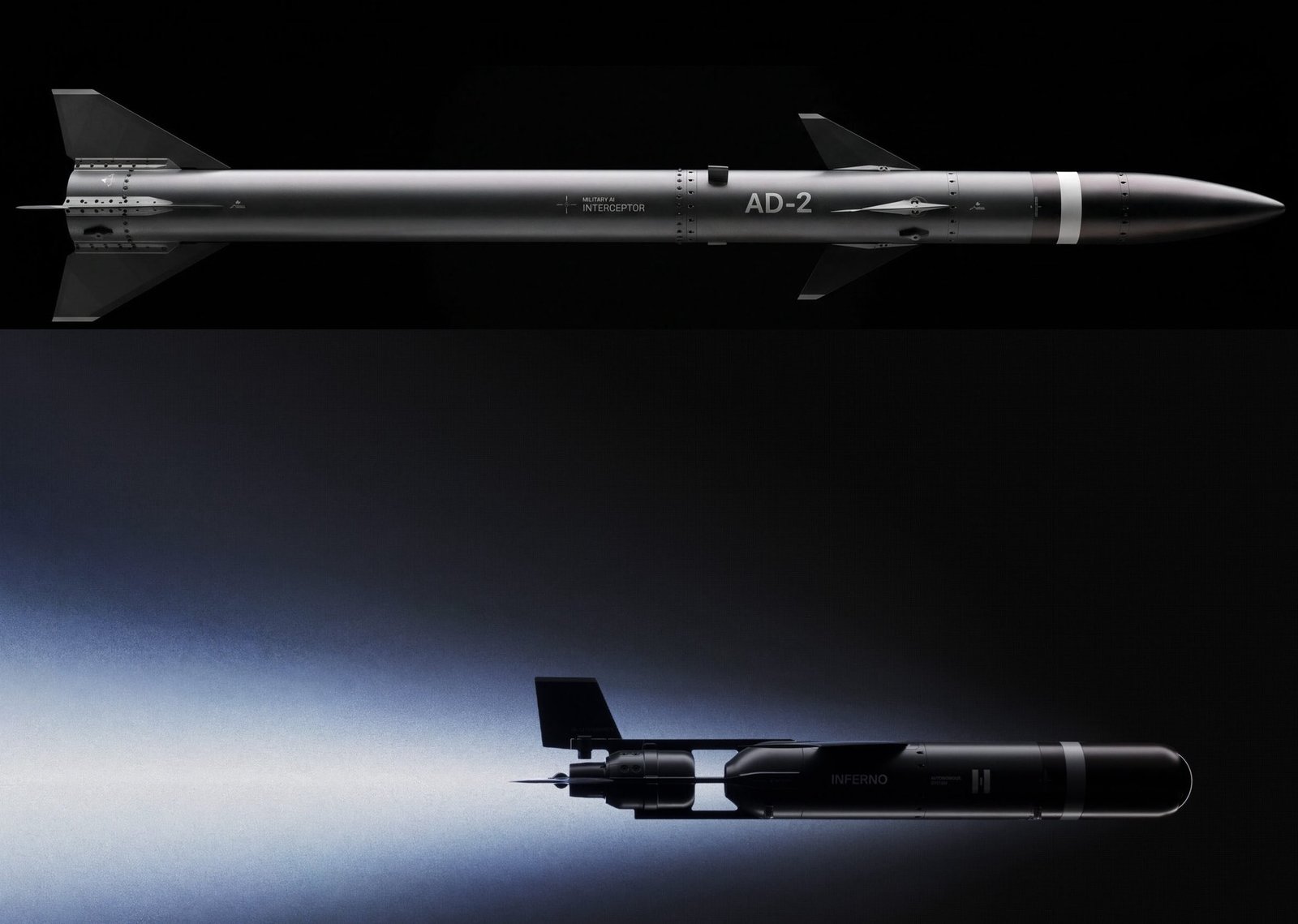
MUNICH, — German defence technology company Helsing has unveiled Contra, an AI-controlled air defence system designed to protect against large-scale drone and missile attacks. The company also introduced two new interceptor missiles, the jet-powered AD-1 Inferno and the rocket-powered AD-2 Ambush, to counter different types of aerial threats. The launch comes as Helsing highlights the growing production of low-cost, jet-powered attack drones and cruise missiles. The company cited intelligence reports indicating that Russian production of Geran-4 and Geran-5 jet-powered drones has reached 4,000 units per month. It also pointed to new Russian launch sites that could place parts of the European Union within range. How the Contra Air Defence System Works Contra combines data from multiple sensors and weapons into a single air picture, allowing it to identify and respond to incoming threats. According to Helsing, the system is designed to detect and engage hundreds or thousands of incoming drones and missiles simultaneously. Despite its autonomous capabilities, human operators retain control over engagement decisions and target prioritisation through Helsing’s Altra command-and-control software. The system also supports third-party equipment, including other interceptors, counter-drone lasers, anti-drone guns and net-based systems. Helsing says these systems can be integrated within days and that it is already demonstrating integrations to prospective military customers. The company has not disclosed specific customers, a service-entry timeline or whether the new interceptors have completed flight testing. AD-1 Inferno and AD-2 Ambush Interceptors The AD-1 Inferno is a jet-powered interceptor designed to counter fast, jet-powered drones. It can remain airborne while waiting for targets, operate in coordinated swarms and attempt to engage a target again if it misses during the first pass. Helsing states that its top speed exceeds 700 km/h. The AD-2 Ambush is a rocket-powered interceptor designed for faster and higher-flying threats. It uses a solid rocket motor to reach Mach 2.5, has a range exceeding 20 kilometres, and can engage targets at altitudes above 9 kilometres. Helsing says it is intended to intercept high-speed, low-observable targets beyond the reach of many low-cost air defence systems. Both interceptors are launched from containers and receive mid-flight course updates from Contra’s ground-based radar stations. During the final approach, their onboard radar seekers locate targets. This allows the interceptors to operate at night and in adverse weather conditions, including fog and heavy cloud cover, when optical sensors may be less effective. Production and Cost Helsing plans to mass-produce the interceptors at its Resilience Factories, using two independent European supply chains. The company has not announced individual missile prices but says the interceptors will cost significantly less than existing conventional missiles. Helsing co-founder and president Niklas Köhler said Contra combines existing sensors and weapons with the company’s new interceptors to address the challenge of defending against inexpensive, mass-produced aerial threats without relying exclusively on costly conventional missiles. Helsing’s Expansion Founded in 2021 and headquartered in Munich, Helsing began as a defence software company before expanding into hardware. Its previous projects include the HX-2 strike drone and the CA-1 Europa uncrewed combat aircraft. In July 2026, the company raised $1.8 billion, bringing its valuation to $18 billion. Following the funding round, Helsing selected West Virginia for its first U.S. Resilience Factory. On October 20, 2026, Helsing announced a commercial partnership with Destinus, a Swiss-Dutch manufacturer of drones and missiles. The launch of Contra and its two interceptors represents Helsing’s latest move to combine artificial intelligence, sensor integration and lower-cost interceptor weapons in an air defence system designed to address large numbers of incoming aerial threats.
Read More → Posted on 2026-10-26 13:50:13
World
HAIFA, Israel, — Israeli defense technology company Elbit Systems Ltd. has secured contracts worth approximately $200 million from an unnamed country in the Asia-Pacific region to supply airborne intelligence, surveillance, target acquisition and reconnaissance (ISTAR) equipment and training solutions. The contracts will be performed over a period of up to five years. Under the agreements, Elbit Systems will supply its SPECTRO 12 multispectral intelligence, surveillance, reconnaissance and targeting payload for integration on helicopters. The compact system is designed for aircraft with strict size, weight and power limitations. The SPECTRO 12 combines high-resolution sensors, a laser designator and AI-powered image processing to support target detection, identification and tracking, as well as precision targeting in complex operational environments and adverse weather conditions. Its sensor package includes a 4K day channel, HD short-wave infrared (SWIR) imaging and full-HD mid-wave infrared (MWIR) thermal imaging. The system also incorporates an eye-safe laser rangefinder and laser pointer. It draws on technologies developed for Elbit’s larger 15-inch-class electro-optical systems. Pilot Training and Head-Up Displays The contracts also cover support and upgrades for the customer's existing airborne live-training systems. These systems support live, virtual and constructive training, including air-to-air and air-to-ground combat scenarios. The training solutions provide real-time combat simulation, weapon scoring and mission debriefing tools to help improve pilot readiness and training effectiveness. In addition, Elbit Systems will supply advanced Head-Up Display (HUD) systems for airborne platforms. The displays feature high-resolution technology, enhanced video capabilities and low power consumption, supporting both day and night operations while helping pilots maintain situational awareness. Elbit Systems has not disclosed the customer country, the aircraft types involved, the number of systems to be delivered or the breakdown of the $200 million contract value. Elbit Systems' Recent Contract Activity The latest award follows a separate contract announced by Elbit Systems in September 2026, valued at approximately $270 million, for SPECTRO-family intelligence, surveillance and targeting systems for an unnamed international customer. There is no indication that the two contracts involve the same customer. On October 19, 2026, the company also announced a separate $235 million contract to supply EXTRA medium-range rockets and its Precise & Universal Launching System to a European customer. For the three months ended June 30, 2026, Elbit Systems reported revenue of $2.2871 billion and an order backlog valued at $32 billion. The company employs more than 21,000 people across dozens of countries on five continents. Commenting on the latest agreements, Bezhalel (Butzi) Machlis, President and CEO of Elbit Systems, said: “Elbit Systems’ airborne solutions combine advanced technologies with extensive operational experience across a wide range of mission environments. We are proud to provide our customers with innovative capabilities that enhance mission effectiveness, situational awareness and operational readiness across a broad spectrum of airborne missions.”
Read More → Posted on 2026-10-26 13:31:52
U.S
WASHINGTON, — The U.S. Department of Defense is preparing major military installations across the continental United States to operate independently for at least 90 days during a major conflict under its new FORTRESS initiative. Announced by Defense Secretary Pete Hegseth on September 30, 2026, during his State of the Force address, FORTRESS stands for Federal Operations for Resilience, Troop Resources, Energy, Supply, and Survivability. According to documents reviewed by Fox News Digital and reporting published on October 25, 2026, the initiative aims to reduce military dependence on civilian infrastructure and global supply chains. Under the plan, major U.S. bases must maintain independent access to electricity, water, fuel, and communications for at least 90 days. Pentagon chief spokesperson Sean Parnell said relying on civilian municipal infrastructure for national defense presents an unacceptable risk. He also noted that previous planning assumptions based on the protection offered by the Atlantic and Pacific Oceans no longer adequately reflect current conditions. Energy Independence and Backup Power FORTRESS prioritizes energy security through portable small nuclear reactors, large-scale battery storage, and local microgrids capable of operating independently of civilian electricity networks. These systems are intended to keep command centres, communications, water systems, logistics, and other critical military functions running during prolonged power outages. Parnell emphasized that electricity is essential to military readiness. Work on microgrids and battery storage is already progressing at selected sites. A senior defense official said in mid-October 2026 that the department was assessing requirements across approximately 500 installations in the continental United States. No deadline has been announced for implementing the complete 90-day standard across all bases. Strategic Reserves and Supply Chain Security The initiative calls for strategic reserves of munitions, fuel, medical supplies, electronic components, spare parts, and critical minerals. Stockpile levels would be determined by expected wartime consumption and the time required to replenish supplies. The Pentagon also aims to establish at least two independent production or supply pathways for critical defense requirements, reducing dependence on a single supplier or factory and helping prevent production disruptions during a conflict. Civilian Factories for Defense Production FORTRESS includes the Civil Reserve Manufacturing Network, established under the fiscal 2026 National Defense Authorization Act. The network identifies civilian factories that could rapidly switch to defense production during a crisis. Preparations include technical requirements, contracts, production-conversion procedures, cybersecurity measures, and regular exercises to test industrial capacity and mobilization readiness. The objective is to prepare factories before a crisis rather than develop conversion plans after a conflict begins. Cybersecurity, Space and Homeland Defense FORTRESS also includes measures to protect military communications, navigation, and satellite systems against cyber threats, space-based disruptions, and GPS jamming. The initiative reflects a broader shift in U.S. homeland defense planning. Parnell pointed to related efforts, including the Golden Dome program and increased attention to the Western Hemisphere, as the Pentagon reassesses threats to U.S. territory and military infrastructure. By strengthening energy supplies, stockpiles, manufacturing capacity, and communications, the Pentagon aims to keep military bases operational even when civilian infrastructure and international supply chains are disrupted. The immediate focus is on installations in the continental United States. Officials have not confirmed whether overseas U.S. military bases will eventually face the same 90-day self-sufficiency requirement.
Read More → Posted on 2026-10-26 13:24:22
Space & Technology
JIUQUAN, — China has successfully launched six new remote-sensing satellites into orbit, expanding its Earth-observation network and continuing the development of its orbital monitoring capabilities. A Long March-4B rocket lifted off at 3:25 a.m. Beijing time on October 24 from the Jiuquan Satellite Launch Center in northwest China. The rocket carried three satellites from the Yaogan-53 group (07, 08 and 09) and three from the Yaogan-56 group (19, 20 and 21). All six spacecraft entered their planned orbits. According to Chinese state media, the satellites will support scientific experiments, land and natural resource surveys, agricultural crop-yield estimation, and disaster prevention and mitigation. Yaogan Satellites Have Civilian and Military Applications The Yaogan satellite programme is China's remote-sensing initiative, but its capabilities also have military significance. U.S. government assessments and Western analysts have linked many satellites in the series to military intelligence and reconnaissance operations. Chinese authorities have not publicly disclosed the specific sensors, technical specifications or surveillance capabilities of the six newly launched satellites. Their precise operational roles therefore remain unclear. The satellites add to China's growing Earth-observation constellation, which supports civilian applications while also having potential dual-use purposes. 673rd Long March Rocket Mission The launch marked the 673rd flight mission of China's Long March rocket family, reflecting the country's continued use of its established launch vehicles to deploy satellites. The Yaogan-53 and Yaogan-56 groups each received their first three satellites in an earlier launch in September 2026. Commercial space companies, including MinoSpace and GalaxySpace, contributed to the development of the satellite groups, although their specific roles have not been disclosed. The latest mission further expands China's orbital remote-sensing infrastructure, which is used for resource monitoring, agricultural assessment, scientific research and other Earth-observation activities.
Read More → Posted on 2026-10-25 15:26:45
Space & Technology
WASHINGTON, — A US Navy patent describes a system that uses powerful laser pulses to create plasma filaments in the air, forming a temporary structure designed to deflect, diffract or partially reflect incoming high-energy laser beams and radio-frequency waves. The concept aims to provide a rapid response to directed-energy threats against military platforms. The patent, titled Method and Apparatus for Laser-Induced Plasma Filaments for Agile Counter-Directed Energy Weapon Applications, was filed on June 15, 2018, by the United States of America as represented by the Secretary of the Navy. It was granted as US Patent 10,508,889 on December 17, 2019. The inventors are Brittany E. Lynn, Alexandru Hening and Ryan P. Lu, based in San Diego, California. The work is assigned to the US government under Navy Case Number 104178. How the Plasma Filament System Works The process begins with a powerful infrared laser pulse travelling through the atmosphere. As the pulse moves through the air, the optical Kerr effect causes it to self-focus as the air’s refractive index changes with light intensity. At sufficiently high intensity, air molecules become ionized, creating plasma that causes the beam to defocus. The balance between self-focusing and plasma-induced defocusing allows the laser pulse to remain concentrated over longer distances, leaving a plasma column behind it. The patent describes initial electron densities ranging from (10^{13}) to (10^{17}) electrons per cubic centimetre, with filaments potentially extending hundreds of metres under suitable conditions. By generating multiple plasma columns in a parallel arrangement, the system creates a temporary, sheet-like structure in the air. The spacing between the filaments can be designed to interact with the incoming electromagnetic waves. In transmission mode, the array can diffract incoming energy into different directions, spreading it over a larger area and reducing the energy concentrated on a protected target. In reflection mode, it can redirect part of the incoming energy towards its source. Because the plasma columns are discrete, the reflection is partial rather than complete. Rapid Response to Directed-Energy Threats The patent identifies high-energy lasers and high-power radio-frequency systems as threats capable of damaging military sensors, electronics and platforms. Existing countermeasures, such as water jets and smoke clouds, can require time to deploy and do not disable the attacking weapon. The proposed plasma-based structure is designed to form rapidly. The patent describes a response on the order of microseconds, with ionization occurring within nanoseconds. Laser pulse energy, repetition rate and wavelength can be adjusted to influence the plasma and its interaction with incoming electromagnetic energy. The document also describes stacking multiple filament planes to increase their combined effect and using a secondary electromagnetic beam to extend the lifetime of the ionized regions. It states that the system would not add radar cross-section when switched off. Research Status and Potential Applications The Naval Information Warfare Center Pacific has pursued related applications of laser-induced plasma filaments, including infrared countermeasures against heat-seeking missiles, free-space optical communications and plasma-based antennas or electromagnetic test targets. The patent is available for licensing to qualified commercial entities through TechLink, the Department of Defense’s technology-transfer intermediary. Licensing and technical inquiries are also identified in the patent documentation for the Navy’s Office of Research and Technical Applications. However, the patent describes a proposed technology, not a confirmed operational defence system. Its publication and grant do not establish that the system has been deployed on Navy ships or demonstrated to provide a complete shield against directed-energy weapons.
Read More → Posted on 2026-10-25 15:18:27
Europe
COPENHAGEN, — Denmark has provided a 750 million Danish kroner (approximately $113 million) state-backed loan guarantee to the Danish subsidiary of Ukrainian defence company Fire Point to build a solid rocket propellant plant in southern Denmark. The Ministry of Industry, Business and Financial Affairs announced the decision on October 21, with financing arranged through the Export and Investment Fund of Denmark (EIFO). Officials said the guarantee is necessary because the war in Ukraine prevents Fire Point from securing loans under normal commercial terms. Rocket Fuel Production in Southern Denmark The plant is under construction in Vojens, southern Jutland, near Skrydstrup Air Base. Covering more than 120,000 square metres, it will produce solid rocket propellant for Fire Point’s FP-7 and FP-7.x missiles, as well as boosters for its Flamingo cruise missile. Once operational, the facility is expected to support production of 800 to more than 4,100 missiles annually. Initial output will supply Ukrainian forces, with plans to serve European defence partners in the future. The plant is expected to begin operations by the end of 2027, about one year later than originally planned. Fire Point CEO Iryna Terekh announced the delay in August, citing slower construction and the need to meet solid rocket fuel safety requirements. The project has also required adjustments to Danish planning and environmental rules, with temporary waivers granted for more than 20 regulations, according to the reports. The estimated plant cost has risen from around €50 million to more than €150 million. Construction began on December 1, 2025, following Denmark’s invitation to Fire Point in September 2025. Denmark’s Support for Ukraine’s Defence Industry Denmark became the first NATO member to host manufacturing facilities belonging to Ukraine’s defence industry. Defence Minister Jeppe Bruus said production outside Ukraine would help protect critical military supply chains from Russian attacks. He also highlighted opportunities for cooperation with the Danish armed forces and companies, including access to technologies and experience developed during the war. Business Minister Martin Lidegaard said the project supports Ukraine’s defence needs while strengthening Denmark’s defence industry and European security. EIFO is involved in nearly 40 projects connected to Ukraine and partnerships between Ukrainian and Danish businesses. Fire Point’s Missile Development Fire Point develops and manufactures unmanned systems, long-range strike drones, cruise missiles and ballistic missiles. The Danish plant will expand its production capabilities outside Ukraine. The company has also signed agreements with more than a dozen European defence firms for radar, guidance and other systems associated with its Freyja missile defence project. The loan guarantee marks another step in Denmark’s support for Ukrainian defence production through cross-border industrial cooperation. The facility’s operational start remains scheduled for the end of 2027.
Read More → Posted on 2026-10-25 15:11:35
U.S
MIDDLE EAST — The United States is expanding its military presence in the Middle East, with warships receiving additional long-range missiles and bunker-buster bombs, a third aircraft carrier heading toward the region, and thousands of additional sailors and Marines being deployed. According to a Wall Street Journal report published on October 24, US personnel aboard the USS George Washington and an accompanying guided-missile destroyer in the Arabian Sea were observed conducting flight operations and replenishing munitions and supplies. The weapons included standoff land-attack missiles and bunker-buster bombs designed to penetrate fortified and underground targets. US officials familiar with military planning said the deployments are intended to provide options if President Donald Trump decides to resume attacks against Iran. However, no final decision on further strikes had been announced in the reporting. Three Aircraft Carrier Strike Groups Heading to the Region Two US carrier strike groups, led by the USS George Washington and USS George H.W. Bush, are already operating in the region. A third, led by the USS Theodore Roosevelt, departed San Diego in late September and is heading toward the Middle East. Its arrival is expected in the coming weeks, with earlier reports pointing to November. An amphibious readiness group led by the USS Makin Island is also heading to the region with more than 2,000 Marines from the 13th Marine Expeditionary Unit. The deployment, alongside the carrier movement, is expected to add approximately 9,000–10,000 sailors and Marines to the regional force. The USS Boxer amphibious readiness group is already operating near the Strait of Hormuz. The expanded deployments come as the US continues its military operations and extends the presence of forces and equipment in the region. Refuelling Aircraft and Strike Preparations US aerial-refuelling activity has also increased across Europe and the US Central Command (CENTCOM) area of responsibility. Open-source tracking reports indicated that approximately 190–195 US aerial-refuelling tankers were tracked across these areas as of October 21. Reported movements included KC-135 and KC-46 tankers, which support aircraft by extending their flight range and time in the air. Separate reports have also described US and Israeli aircraft conducting activities associated with possible strike planning, including flights over Iraq and routes approaching Iran. The details and operational purpose of these activities have not been fully confirmed. Regional Tensions Ahead of US Midterm Elections The military buildup is taking place ahead of the November 3 US midterm elections, with the administration considering its options toward Iran. The movements could support several potential missions, including protecting commercial shipping, maintaining regional security and conducting further military operations if authorised. Regional tensions remain high, including concerns over missile threats and security around key waterways. Meanwhile, diplomatic contacts are continuing alongside military preparations. The deployment of additional warships, munitions, refuelling aircraft and personnel indicates that the United States is maintaining the capability for sustained operations in the region. However, the buildup alone does not confirm that a new US strike against Iran is imminent.
Read More → Posted on 2026-10-25 15:06:12
World
LONDON, — The UK Ministry of Defence (MoD) has opened a tender to acquire Skydio X10D reconnaissance drones, with an estimated contract value of £120,000 excluding VAT and £144,000 including VAT. The American-made quadcopter is designed for intelligence, surveillance and reconnaissance (ISR) missions. Published in 15 October 2026 on the Defence Sourcing Portal and the Find a Tender service, the procurement notice is titled “Acquisition of SKYDIO X10D Uncrewed Air System UK4.” It was issued by Navy Commercial, the Royal Navy’s procurement office based at Whale Island in Portsmouth, under the Procurement Act 2023. The tender does not specify the number of drones to be purchased or the military unit that will operate them. Delivery is planned for the South-East of England. Suppliers must submit bids by 11:59 PM UTC on November 19, 2026, with the supplier selection expected around November 26. The contract is scheduled to run from November 30, 2026, to March 31, 2027, although a separate portal listing gives December 10 as a possible start date. The opportunity is suitable for small and medium-sized enterprises (SMEs), and the contract will be awarded on the basis of price. Skydio X10D Drone Capabilities Manufactured by Skydio in Hayward, California, the X10D is a compact, rucksack-portable quadcopter designed for military reconnaissance. The drone uses onboard artificial intelligence (AI) to navigate around obstacles and track subjects, including in complete darkness. Its camera systems include daytime and thermal imaging capabilities, allowing it to gather information in different lighting conditions. The X10D can automatically switch radio channels to help maintain its communications link in environments affected by electronic warfare and jamming. It can also hold its position and navigate without relying on GPS signals. Depending on configuration, the drone weighs approximately 2.11–2.14 kg, has a maximum flight time of around 40 minutes and reaches speeds of about 45 mph (72 km/h). The system has been listed on the US Department of Defense’s Blue UAS list since May 2024, indicating that it has been included in the US military’s approved small-drone programme. International Adoption and Previous UK Experience The X10D has been adopted by the US Army and other international military customers. In March 2026, the US Army ordered more than 2,500 X10D drones for over $52 million, in what Skydio described as the largest single-vendor small-drone order in Army history. Spain signed a contract worth up to €18 million in February 2025, while Norway issued an initial tender valued at 101 million Norwegian kroner in July 2025, according to the supplied information. The UK military has previously tested Skydio technology. In May 2022, Defence Equipment and Support’s Future Capabilities Group awarded a contract worth approximately £3 million for the earlier X2D drone, following trials involving 90 Skydio drones in 2020. Delivery was managed alongside British partner Marlborough Communications. More recently, in September 2026, the British Army contracted for more than 1,000 small drones under a £16 million package that included 670 Skydio X10 systems, supplied through Marlborough Communications as part of Project Rapstone, according to the supplied information. The latest tender represents a further procurement opportunity for the X10D through the Royal Navy’s commercial procurement channel. The final quantity and the intended operating unit have not been disclosed.
Read More → Posted on 2026-10-25 14:59:00
India
KOCHI, — The Naval Physical and Oceanographic Laboratory (NPOL), a research laboratory of the Defence Research and Development Organisation (DRDO) in Kochi, has issued a Request for Proposal (RFP) for the development of Version 2 Side Scan Sonar (SSS) and Multi-Beam Echo-Sounder (MBE) transducer arrays for two Autonomous Underwater Vehicles (AUVs). The procurement aims to equip the underwater vehicles with acoustic sensors for high-resolution seabed imaging, depth measurement and maritime surveys. The RFP specifies four 1.8-metre Side Scan Sonar arrays for port and starboard mounting, along with two complete sets of Multi-Beam Echo-Sounder arrays, each comprising transmitter and receiver elements. Technical Requirements for Side Scan Sonar The SSS arrays will operate in the 450–500 kHz frequency range, with a bandwidth greater than 50 kHz. Each array must include 40 receiver (Rx) modules and three transmitter (Tx) modules. The specified receive beamwidth is 0.1° × 45°, with a source level of at least 203 dB and receive sensitivity of –200 dB or better. The system must also include a 38 dB preamplifier. Side-scan sonar produces acoustic images of the seabed by transmitting sound pulses to either side of a moving platform. The resulting images can help identify underwater objects, including mines, wrecks and debris. Multi-Beam Echo-Sounder Specifications The MBE arrays will operate in the 625–675 kHz frequency range, with a bandwidth of 50 kHz. The specified configuration includes 96 receiver modules and three transmitter modules. The system must achieve a source level of at least 185 dB and receive sensitivity of –208 dB or better. Unlike side-scan sonar, which primarily produces seabed images, a multi-beam echo-sounder measures depth across multiple beams to generate detailed underwater topographical maps. The two systems will provide complementary imaging and survey capabilities for the AUVs. Deep-Water and Environmental Testing NPOL requires both sonar systems to operate at depths of 300 metres or more. Their structural design must withstand a baseline hydrostatic pressure of 30 bar, with pressure testing specified between 35 and 45 bar. The equipment must also undergo thermal endurance tests and withstand vibration levels of up to 6 Grms to meet the specified environmental and mechanical requirements. Supporting India’s Underwater Capabilities NPOL, based in Thrikkakara, Kochi, works on sonar systems, underwater surveillance technologies and oceanographic research in support of the Indian Navy. The new procurement aligns with India’s efforts to expand the use of uncrewed underwater systems for maritime surveys and mine-countermeasure missions. In November 2025, the Naval Science and Technological Laboratory (NSTL) in Visakhapatnam, working with NPOL and other DRDO laboratories, completed development of a new generation of man-portable AUV swarms equipped with side-scan sonar and cameras. The systems underwent field trials and were prepared for production. The latest RFP seeks transducer arrays that meet the specified acoustic performance and environmental requirements for integration into two designated AUVs. Further information on delivery timelines, bidder eligibility and evaluation criteria is available in the official tender documents.
Read More → Posted on 2026-10-25 14:29:27
India
NEW DELHI, — India has issued a Notice to Airmen (NOTAM) for a High Altitude Pseudo Satellite (HAPS) test at the Defence Research and Development Organisation’s (DRDO) Integrated Test Range (ITR) at Chitradurga, Karnataka. The NOTAM is valid from 05:30 IST on October 26, 2026, until 05:30 IST on October 31, 2026, with a vertical limit extending from ground level to 20,000 feet. The Aeronautical Test Range (ATR) at Challakere, in Chitradurga district, supports testing of unmanned and manned aerial systems, including unmanned aerial vehicles and aerostats. India Advances Indigenous HAPS Development HAPS platforms are designed to operate in the stratosphere, typically at altitudes of 18–25 km, supporting intelligence, surveillance, reconnaissance and communications relay missions. DRDO’s Aerial Delivery Research and Development Establishment (ADRDE) has been developing a lighter-than-air HAPS platform. During a trial on October 6, 2026, the experimental platform reached 21 km above mean sea level and maintained an altitude of around 20 km for more than 30 minutes before a controlled descent and recovery. Real-time video and flight data were transmitted to a ground control station. The trial involved coordination with the Indian Air Force, CEMILAC, DGCA, the Airports Authority of India and other agencies. The flight followed an airship trial in May 2025 from Sheopur, Madhya Pradesh, where a prototype reached approximately 17 km and remained airborne for around 62 minutes. Meanwhile, CSIR-NAL has tested subscale fixed-wing, solar-powered HAPS prototypes at Chitradurga, with flights reaching approximately 24,000–25,000 feet. Separate airship-based and fixed-wing HAPS programmes also received Defence Acquisition Council clearances in 2026. The latest NOTAM indicates continued testing activity at Chitradurga as India advances its indigenous high-altitude platform capabilities. Details of the current test configuration have not been publicly released.
Read More → Posted on 2026-10-25 14:21:13
World
ABU DHABI, — UAE defence technology group EDGE has integrated autonomous maritime and aerial systems during a naval demonstration involving the United Arab Emirates Navy and the United States Navy. The exercise showcased Emirati and allied technologies operating under a unified command structure for reconnaissance and force protection missions. The demonstration took place in the presence of Major General Staff Humaid Mohammed Al Rumaithi, Commander of the UAE Naval Forces, and featured maritime technologies from the UAE, the United States and the United Kingdom. EDGE provided operational facilities, planning expertise and equipment, while its specialists worked with both navies to design and conduct the scenarios. Unmanned surface vessels (USVs) used artificial intelligence (AI), onboard sensors and command-and-control systems. Unified Command and Autonomous Operations Hamad Al Marar, EDGE’s managing director and chief executive officer, said effective coordination and control are increasingly important as autonomous systems become more capable. The demonstration connected participating systems through a single command layer, allowing human operators to define mission parameters while AI supported execution. This provided Emirati and allied forces with a common operating picture for coordinated activities across the air and sea. The command architecture centred on TACTICA AI’s Naval Warfare C2 Centre for Autonomous Systems, paired with HADAF, a sovereign UAE targeting system based on military doctrine, operational knowledge and rules of engagement. The exercise also used the Maritime Autonomy Kit, developed by the Technology Innovation Institute (TII). EDGE led the integration of sovereign autonomous systems for a UAE Navy demonstration with the US Navy. One command layer connected multiple systems, turning autonomy into coordinated action and strengthening interoperability between allied forces https://t.co/JyLjOVc3fK — EDGE (@_edgegroup) October 22, 2026 170 M-DETECTOR and Maritime Capabilities A key asset was the 170 M-DETECTOR, a 17-metre surface vessel produced by EDGE entity Abu Dhabi Ship Building. It can operate in manned or unmanned configurations and supports surveillance, mapping and surface operations. The vessel features two 900-horsepower diesel engines, speeds of up to 40 knots, a silent electric propulsion mode, multi-beam sonar and 360-degree cameras. Counter-Drone Defence and Surveillance EDGE deployed the VORTEX-E interceptor and SKYSHIELD-N naval counter-unmanned aerial system to protect naval assets against drone threats. SKYSHIELD-N can jam and spoof drone command links and GNSS frequencies at ranges of up to 10 kilometres, according to the supplied information. The forces also used GPS-PROTECT anti-jamming technology to protect satellite navigation. The MIRSAD-X multispectral electro-optical imager, working alongside a network of maritime radars, handled detection and tracking. Strengthening UAE-US Naval Cooperation EDGE said operating its systems alongside allied military assets helped improve interoperability between the UAE and US navies. Participants also exchanged operational knowledge and assessed the potential application of autonomous maritime technologies in defence operations. The demonstration highlighted the integration of unmanned vessels, sensors, targeting systems and counter-drone defences under a common command structure to support maritime reconnaissance and force protection.
Read More → Posted on 2026-10-25 14:10:20Search
Top Trending in 24 Hours
-
 Pentagon Launches FORTRESS Initiative to Make Major U.S. Bases Self-Sufficient for 90 Days
-
 Saudi Arabia, Pakistan and Turkey Hold High-Level Security Talks with Iran in Tehran Amid Reports of Potential Iranian Integration
-
 SpaceX Secures $40 Billion in Debt Financing for AI Chips as Musk Predicts Industry Consolidation
-
 German Firm Helsing Unveils Contra AI Air Defence System with AD-1 Inferno and AD-2 Ambush Interceptor Missiles
-
 Pentagon’s DIU Opens Second Phase of SWAP-USV Challenge for Counter-Air Unmanned Surface Vessels
-
 Ukraine Reveals New Details on R-287T and R-287R Missiles for Shershen Air Defense System
-
 Indian DAC to Evaluate ₹75,000 Crore Project 18A for Next-Generation Navy Destroyers
-
 U.S. Space Command Blocks Release of Records on Auckland Surveillance Hub Linked to Iran Operations
Top Trending in 4 Days
-
Pentagon Launches FORTRESS Initiative to Make Major U.S. Bases Self-Sufficient for 90 Days
-
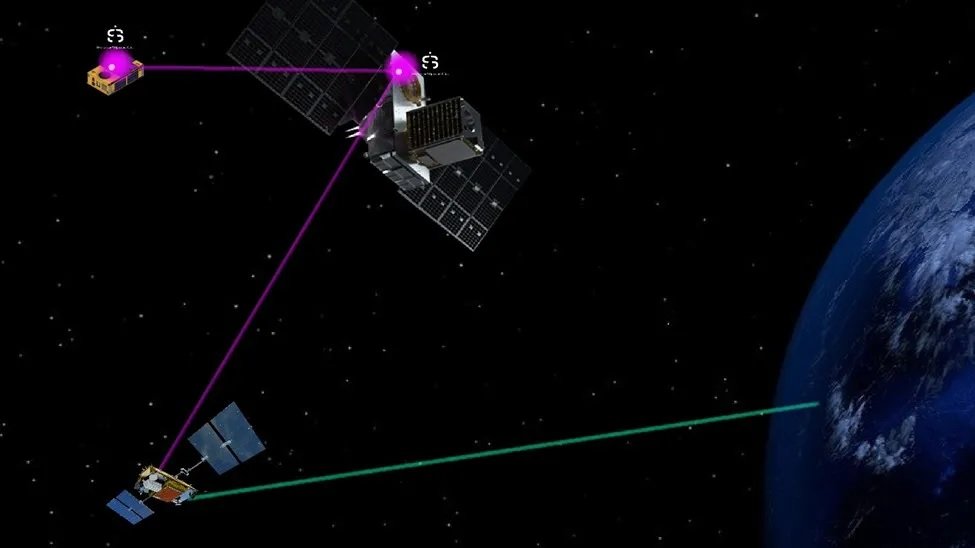 NASA Demonstrates Space-to-Space Wi-Fi Between Two Orbiting Spacecraft
-
 USS Pinckney Becomes First U.S. Navy Destroyer to Begin Phase Two Modernization with Advanced SPY-6 Radar
-
 U.S. Military to Ban Chinese Automaker BYD Vehicles from Kadena Air Base in Japan Over Security Concerns
-
Saudi Arabia, Pakistan and Turkey Hold High-Level Security Talks with Iran in Tehran Amid Reports of Potential Iranian Integration
-
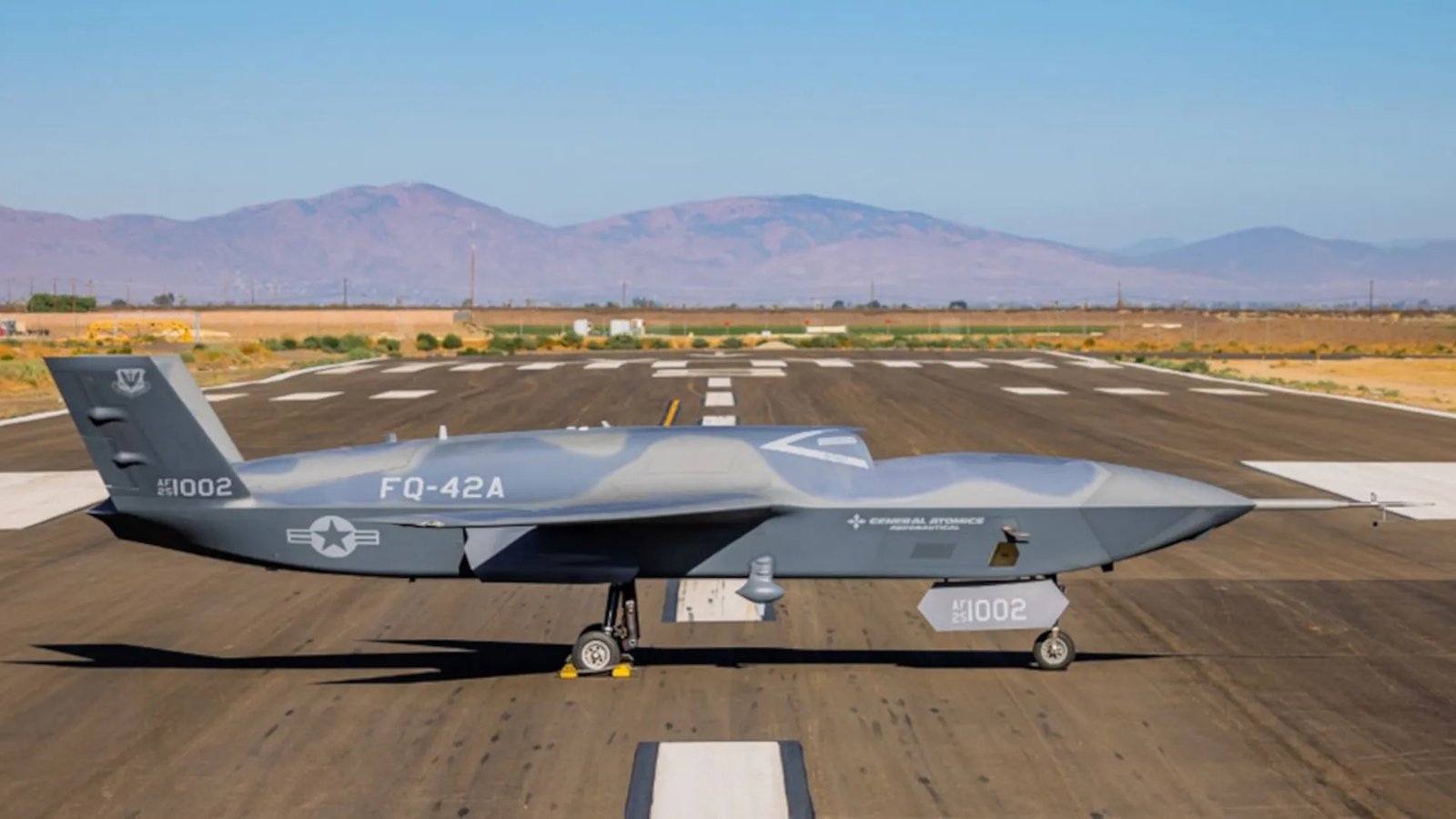 General Atomics Partners With Spirit Defense to Expand FQ-42 Vengeance Production
-
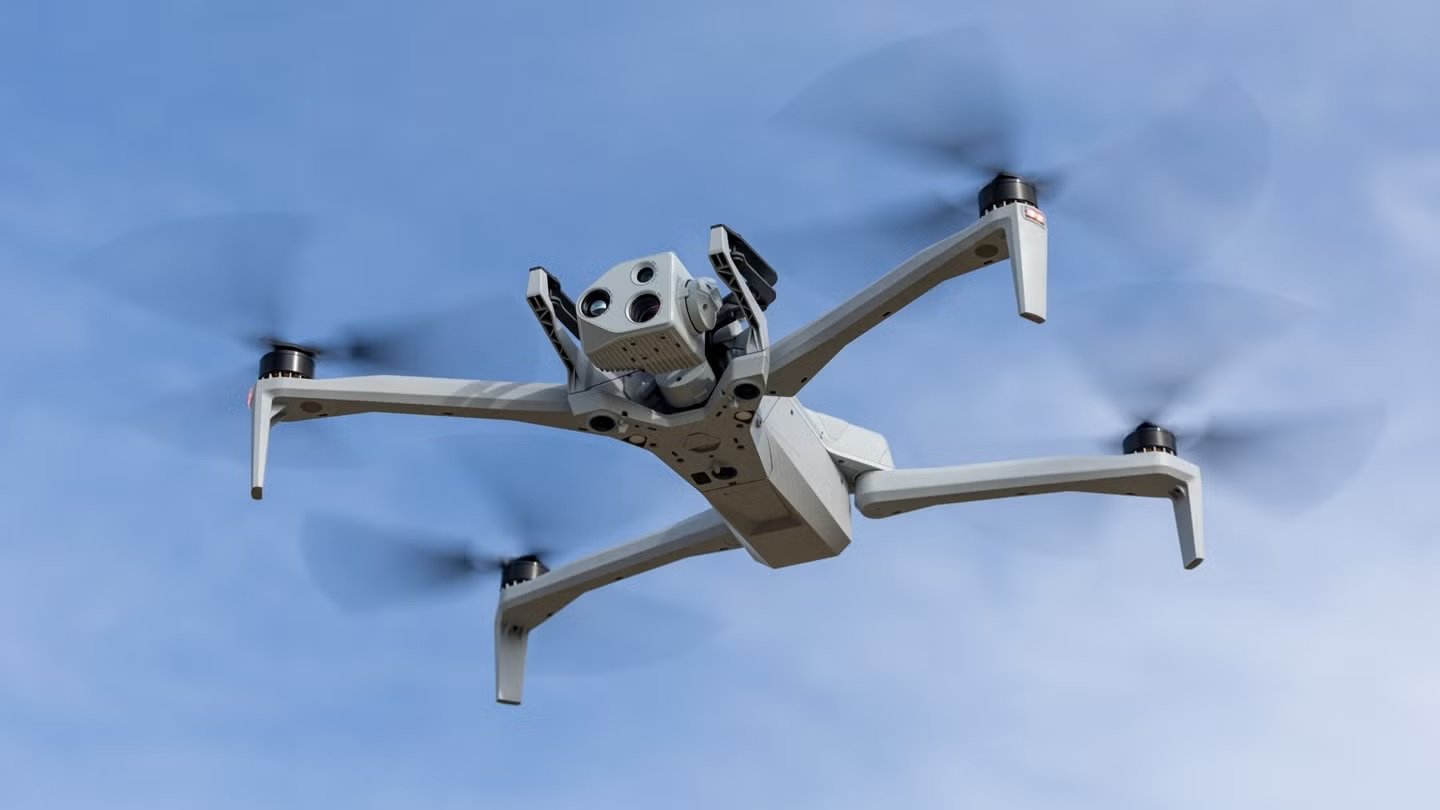 UK Ministry of Defence Opens £120,000 Tender for Skydio X10D Drones
-
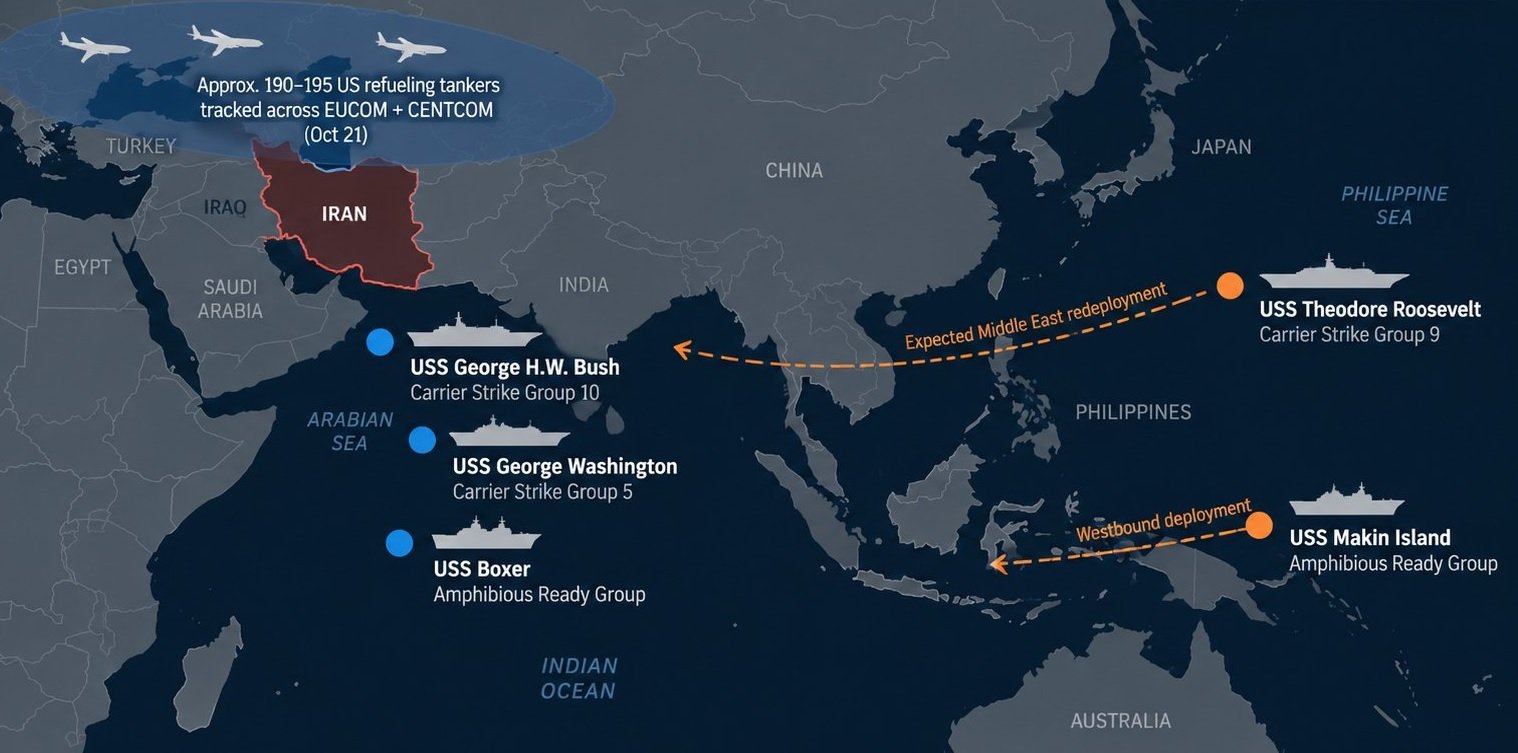 US Expands Military Buildup Near Iran with Third Aircraft Carrier and Additional Marines
