
India
NEW DELHI, — Bengaluru-based Flying Wedge Defence & Aerospace (FWDA) unveiled a full-scale static prototype of its FWD Supreme autonomous combat aircraft in New Delhi on October 13, 2026. The company describes it as India's first indigenous AI-piloted loyal wingman concept, designed to operate alongside manned fighter jets. The aircraft is intended for reconnaissance, electronic warfare, decoy operations and precision strikes, with AI systems enabling autonomous decision-making. Similar loyal wingman programmes are under development in the United States, Turkey and other countries. FWD Supreme Specifications The programme includes two variants: the Supreme Heavy, weighing 1,000–1,500 kg, and the Supreme Lite, a 250 kg technology demonstrator. The Heavy is designed in a flying-wing configuration measuring approximately 10 × 10 metres, with an internal weapons bay and a planned payload capacity of around 350 kg. Company specifications target a cruising speed of 500–600 km/h, a maximum speed of Mach 0.8–0.85, a range exceeding 1,500 km and endurance of more than two hours. Its propulsion system is planned to deliver approximately 5 kN of thrust, with a twin-engine configuration under consideration. These figures remain design targets and have not been demonstrated in flight. The Heavy's configuration has been finalised, and detailed design work is approximately halfway complete, according to the company. The Supreme Lite has completed taxi trials. FWDA expects its maiden flight within six to eight weeks of the October 13 unveiling, potentially in late November or December 2026. It will validate technologies for the larger aircraft while also serving as a potential standalone platform. AI Drone Teaming and Navigation FWDA's Mobbing Doctrine envisages teams of 15–20 AI-controlled drones operating alongside a crewed fighter. They would coordinate surveillance, electronic warfare, decoy and strike missions while sharing information and making tactical decisions. Founder and CEO Suhas Tejaskanda said the programme aims to enable aircraft to operate with minimal human intervention. The company has indicated a target unit cost of $3–5 million. For GPS-denied environments, the aircraft is planned to use visual odometry, which estimates movement and position from onboard camera images, alongside inertial navigation systems. Satellite communications and secure aircraft-to-aircraft networking are also planned. FWDA is working with the Indian Institute of Science (IISc), Bengaluru, on data encryption and quantum-related applications. Indigenous Engine and Development Costs FWDA plans to integrate the DRDO-developed Manik engine to increase domestic content. The company estimates that indigenous components could account for around 80% with the Indian engine, compared with approximately 60% if an imported engine is used. Engines from Czech manufacturer PBS are also being considered as alternatives. The Supreme Lite has been reported to have around 90% indigenous content in some company statements. The programme's estimated development cost is $100 million, including $10 million for the Supreme Lite. FWDA has raised $7 million for the lighter aircraft programme and is seeking further private investment. It has also outlined Operation Triple Seven, an initiative involving potential international partners for development and manufacturing. Flight Testing and Procurement Status The October 13 display was a static, non-flying prototype, and the Supreme Heavy has not yet completed flight testing. Further work will cover technology development, systems integration, testing and certification, including engagement with the Centre for Military Airworthiness and Certification (CEMILAC). A. Anbarasu, the Ministry of Defence's acquisition chief, attended the unveiling. However, no formal government procurement agreement or funding commitment was announced. Founded in 2022, FWDA is developing the FWD Supreme alongside other Indian unmanned combat aircraft initiatives, including the DRDO's Ghatak and Hindustan Aeronautics Limited's CATS Warrior. The aircraft's proposed performance and autonomous capabilities remain subject to testing and validation.
Read More → Posted on 2026-10-24 16:29:28
U.S
LOS ANGELES, — The U.S. Space Force is preparing to acquire commercial technologies for operations in cislunar space, the region between Earth and the Moon, with the aim of fielding initial capabilities by the end of fiscal year 2029. Maj. Gen. Stephen Purdy, the Space Force’s portfolio acquisition executive for advanced programs, outlined the plan at the Space Industry Days conference in Los Angeles. According to reports from Breaking Defense, the service plans to issue two requests for information (RFIs) to identify commercially available or near-ready technologies that can be deployed without lengthy research and development. Space Force Seeks Three Key Capabilities The first RFI will focus on spacecraft, sensors and related systems for space domain awareness, enabling the military to monitor and track activity across the Earth-Moon region. It will also seek positioning, navigation and timing (PNT) systems that can support operations beyond traditional Earth orbit, along with the ground infrastructure needed to connect these capabilities. The second RFI will seek artificial intelligence software that enables spacecraft to operate more autonomously. Such systems would help spacecraft process sensor data, detect onboard hardware failures and adjust their operations without requiring constant instructions from ground control on Earth. Purdy said the Space Force wants existing commercial or near-commercial solutions that can be delivered quickly rather than projects requiring years of additional development. He emphasized the need for rapidly deliverable capabilities instead of spending research and development funds on systems that are not yet ready for operational use. The target is to field initial capabilities by September 2029, the end of fiscal year 2029. Earlier work by the Air Force Research Laboratory and the Defense Advanced Research Projects Agency (DARPA) has explored technologies for cislunar operations, but the new initiative is intended to move toward procurement and practical military use. China’s Cislunar Activities Drive U.S. Concerns China’s expanding activities in cislunar space are a major reason for the accelerated effort. Purdy said, “China is moving out in this area. We have traditionally not.” A recent Chinese project involved launching 30 CubeSats into a highly elliptical orbit near an Earth-Moon Lagrange point and into lunar orbit. China has described the project as a scientific effort at United Nations-related meetings, while defense experts cited by Breaking Defense have raised concerns about its potential use for cislunar surveillance. Defense Secretary Pete Hegseth also highlighted the strategic importance of cislunar space on October 20 in Dayton, Ohio, saying that control of subsea and cislunar domains would be important in future conflicts. Chairman of the Joint Chiefs of Staff Gen. Dan Caine has likewise called for the military to prepare to operate across domains extending from the seabed to cislunar space. Space Force Coordinates with NASA The Space Force is working with NASA to coordinate infrastructure that can support both civilian lunar exploration, including the Artemis program, and military requirements. Areas of interest include lunar time systems, communications and space domain awareness. The service established a Cislunar Coordination Office in May 2026 to develop roadmaps, coordinate acquisition priorities and give commercial companies clearer information about military requirements. The office is also working to identify gaps in existing capabilities and coordinate investments across government agencies. The Space Systems Command has also launched the ACES initiative, according to the supplied information, to help commercial space companies address security-clearance barriers that can complicate participation in classified military projects. No contracts have been awarded, and no operational weapons deployments in cislunar space have been announced. The immediate priority remains developing surveillance, navigation, communications and autonomous spacecraft capabilities that can support U.S. operations in the Earth-Moon region by the end of fiscal year 2029.
Read More → Posted on 2026-10-24 16:26:36
India
NEW DELHI, — India is developing an indigenous artificial intelligence (AI) layer for its armed forces and expanding domestic production of conventional ballistic missiles to reduce costs and strengthen military preparedness. Speaking at the KPMG Agrasar Bharat Manch event on October 23, Defence Secretary Rajesh Kumar Singh outlined the plans to prepare the armed forces for technology-driven warfare and increase domestic manufacturing capacity. India Develops Indigenous Military AI The Ministry of Defence, working with the IndiaAI Mission, is developing a dedicated military AI layer to support data fusion, target acquisition and decision-making. The system aims to shorten the sensor-to-shooter loop, allowing information gathered by surveillance systems to be processed more quickly for operational responses. The computing infrastructure required for the project is being procured. The government plans to work with private-sector companies already selected under the national AI initiative. Singh stressed that technological sovereignty is essential because military AI systems will handle sensitive operational data. Reliance on foreign companies could create security risks or limit access to critical technology. India remains open to cooperation with trusted foreign countries but prioritises developing these capabilities domestically. Human oversight of operational combat decisions will remain necessary despite the integration of AI. DRDO Opens Missile Technologies to Industry Alongside digital modernisation, India is increasing the production of conventional ballistic missiles to lower costs and build the industrial capacity required for prolonged, high-intensity conflicts. Singh, serving as acting chairman of the Defence Research and Development Organisation (DRDO), said conventional missile technologies developed over several decades have been placed in the public domain to enable wider domestic production. Nearly 17 major private- and public-sector companies have either signed Production of Technology (POT) agreements or are in the process of receiving technology transfers for conventional missiles of different ranges. The initiative aims to expand manufacturing capacity and reduce dependence on foreign suppliers. Singh said India can produce missiles at nearly one-fourth the price charged by foreign manufacturers. Drawing lessons from recent conflicts, including Iran's experience, Singh highlighted the need for larger quantities of conventional ballistic missiles and drones in future warfare. Expanding production is intended to strengthen India's strategic deterrence and wartime readiness. The initiatives form part of India's broader defence modernisation efforts, which address AI, drone warfare, cyber threats and precision weapons while strengthening domestic technological capabilities and manufacturing.
Read More → Posted on 2026-10-24 16:19:53
Space & Technology
HOUSTON, — NASA has successfully demonstrated space-to-space Wi-Fi communication between its R5-S10 CubeSat and Momentus’ Vigoride-7 orbital service vehicle, allowing the two spacecraft to exchange data and relay information to mission controllers on Earth. The demonstration took place on September 17, 2026, in low Earth orbit, using the Deke Space Communicator, a Wi-Fi system developed by San Francisco-based Solstar Space and installed aboard Vigoride-7. During approximately 30 minutes of proximity operations, the system facilitated the collection and transfer of more than 2,300 data files. The files included optical imagery, infrared observations and LiDAR sensor readings gathered as the CubeSat flew near Vigoride-7 and inspected the vehicle under different lighting conditions and at different distances. Spacecraft Exchange Data Through Wi-Fi During the demonstration, the R5-S10 CubeSat transmitted a portion of its collected data to the Deke Space Communicator aboard Vigoride-7 through a local Wi-Fi connection. The information was then relayed through an experimental link using the Iridium satellite communications network to mission controllers at NASA’s Johnson Space Center in Houston, Texas. Before the flight, ground testing had demonstrated that the wireless link could operate over distances exceeding 200 meters. The communication test formed part of a broader mission that included commercial sensor demonstrations aboard Vigoride-7 under a SpaceWERX contract. Solstar announced the results of the wireless data exchange in October 2026. R5-S10 CubeSat Mission Background The R5-S10 is a 6U CubeSat developed under NASA’s Realizing Rapid Reduced-cost high Risk Research (R5) program. It launched on March 30, 2026, aboard SpaceX’s Transporter-16 rideshare mission from Vandenberg Space Force Base in California. The spacecraft was deployed from Vigoride-7 on September 17, 2026, and then operated as a free-flying inspection spacecraft. Its mission included capturing images of the orbital service vehicle to assess its condition and performance. The Wi-Fi demonstration was designed to test how spacecraft can exchange information locally without depending entirely on continuous communication with ground stations. Supporting Future Autonomous Space Missions Reliable wireless links between spacecraft could support autonomous satellite inspections, in-orbit servicing and repairs, and future spacecraft assembly. These operations require multiple vehicles to share information and coordinate activities with less intervention from ground controllers. The data collected during the R5-S10 mission is also being used to train artificial intelligence models intended to support future autonomous space missions. Solstar founder and CEO Brian Barnett said the technology helps spacecraft remain connected and deliver mission data to operators in near real time. Momentus CEO John Rood described the partnership as adding a communications capability that expands the possibilities for proximity operations. The demonstration also highlights the role of commercial companies in developing space communications infrastructure. Following the test, investment firm Encore Technologies Corp. highlighted its recent $1.16 million strategic investment in Solstar Space, citing the importance of commercial communication networks for future space operations.
Read More → Posted on 2026-10-24 16:13:54
World
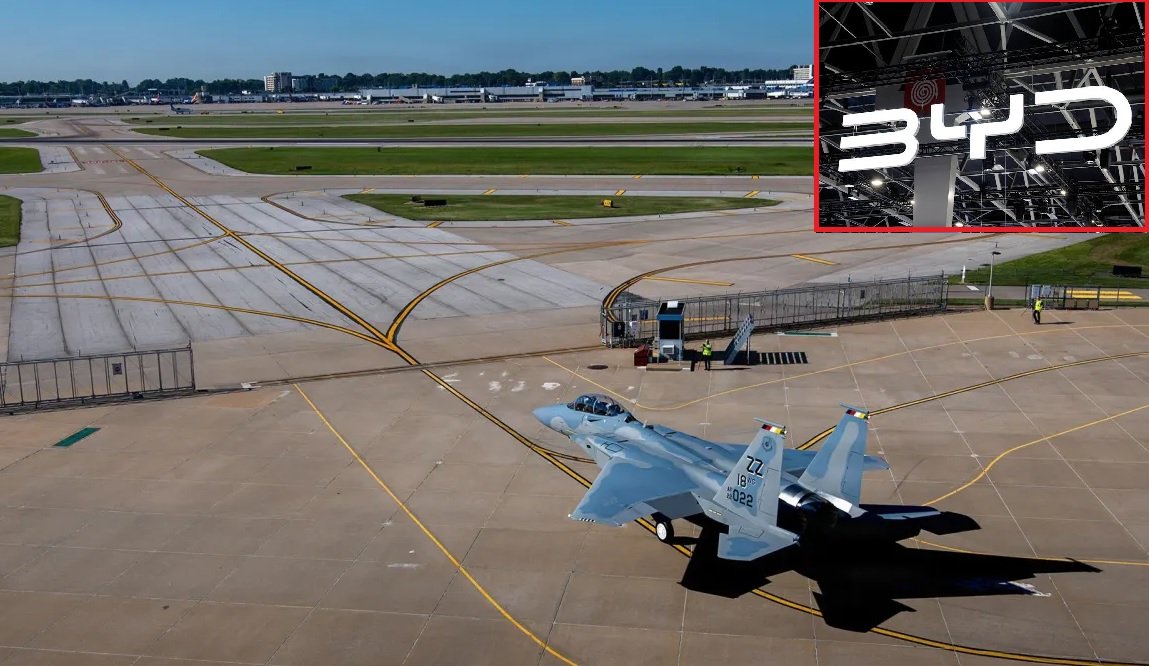
OKINAWA, Japan, — The U.S. military will ban Chinese automaker BYD's vehicles from Kadena Air Base in Okinawa, Japan, starting October 26, over concerns that their cameras, sensors and connected systems could collect sensitive military information. The restriction covers all BYD models, including privately owned cars, contractor vehicles, taxis and commercial delivery vans. The 18th Security Forces Squadron will stop BYD vehicles at every gate and direct them to turn around, with no planned exceptions. Kadena spokesperson Lieutenant Colonel Alli Stormer said the vehicles present an “unacceptable and unmitigable risk to our personnel and our mission.” She did not disclose specific technical details behind the decision. BYD did not immediately respond to requests for comment. Security Concerns Over Connected Vehicles Modern electric vehicles use cameras, sensors and connected software to map their surroundings and support driver-assistance features. Some systems can transmit collected data to external servers, raising concerns that vehicles entering military installations could capture facility layouts, aircraft movements, troop activities and operational patterns. Kadena is one of the largest U.S. Air Force bases in the Indo-Pacific. It hosts the 18th Wing, part of the Fifth Air Force, which operates fighter, aerial refueling and surveillance aircraft. The base is located on Okinawa, near the East China Sea. Similar Restrictions and Security Incidents During Exercise Hovedstad near Oslo Airport in Norway, from September 14 to 18, Norwegian Armed Forces personnel discovered that rented Deepal vehicles manufactured by China's state-owned Changan had recorded soldiers, their movements and access codes entered at military gates. The vehicles were supplied by Hertz Norge, which has indirect ownership ties to China's Geely group. Due to limited alternative transport, soldiers continued using them until the exercise ended and manually deleted stored footage. Hertz Norge subsequently stated that customer data is not shared with manufacturers or third parties without appropriate legal grounds. The Polish military and Israel Defense Forces have also restricted Chinese-made vehicles at certain military facilities over data-collection concerns. In 2018, the Pentagon directed base exchanges worldwide to stop selling Huawei and ZTE smartphones. In June 2026, the U.S. Department of Defense added BYD, NIO, Baidu and other Chinese companies to its list of entities it believes support China's military. Inclusion on the list does not automatically prohibit the use of their products. China has also imposed similar restrictions on foreign vehicles. In 2021, Beijing barred Tesla vehicles from certain government and military compounds over camera-security concerns. The restrictions were lifted in 2024 after Tesla met domestic data-security requirements, according to reports. Potential Impact Across East Asia BYD has been expanding its presence in Japan, opening dealerships and introducing models designed for the local market. In July 2026, it launched the Racco electric minicar in Japan, targeting a market dominated by domestic automakers. The Kadena restriction could prompt consideration of similar measures at other U.S. military installations in East Asia, including Marine Corps Air Station Futenma and U.S. Forces Korea bases. However, no wider ban has been confirmed, and U.S. Forces Korea stated that it had not changed its vehicle access policies. The United States has approximately 50,000 troops stationed in Japan and another 39,000 in South Korea, making vehicle access and connected-technology security relevant to military installations across the region. Main Source : Kangnamtimes / Defence-blog
Read More → Posted on 2026-10-24 16:04:56
World
NETANYA, Israel, — Israeli defense technology company Silynxcom Ltd. is developing an AI-powered wearable drone detection system that identifies incoming drones by their acoustic signatures and provides early warnings to individual soldiers. The company announced the project as it expands into the counter-uncrewed aircraft systems (C-UAS) market. The prototype uses onboard artificial intelligence to analyze sounds produced by drone motors and rotors in real time. When the system recognizes a potential drone threat, it automatically alerts the wearer. Unlike conventional radio-frequency (RF) detection systems, the technology relies on sound, allowing it to potentially identify drones that do not emit detectable control signals. This capability is particularly relevant against fiber-optic-guided first-person-view (FPV) drones, which use physical cables instead of radio-frequency links for operator control and can therefore evade conventional RF-based detection systems. Builds on Existing Tactical Headsets The new system builds on Silynxcom’s existing tactical communication equipment, including its CLARUS II in-ear headset. The company's earlier drone-detection feature amplifies specific frequencies associated with drone motors and rotors, helping soldiers distinguish these sounds from battlefield noise while protecting their hearing from hazardous and sudden loud sounds. The new AI platform advances this approach by automatically recognizing potential drone signatures and issuing alerts instead of relying primarily on the soldier’s ability to hear and identify the sounds. Mesh Network to Share Drone Alerts Silynxcom is developing a mesh-networking capability that would connect wearable devices across a military unit. An alert generated by one soldier’s device could be shared with other connected personnel, including members of a platoon, improving shared situational awareness. The network is designed to operate independently of existing tactical communications infrastructure, while retaining the option to integrate with standard military radio systems when required. The company is developing the platform as a standalone product. Development Status and Company Plans Silynxcom is establishing a dedicated counter-drone development team comprising professionals recently recruited from leading Israeli drone manufacturers. The initiative expands the company's activities beyond its established range of ruggedized tactical headsets, hearing-protection systems and military communication equipment. Chief Executive Officer Nir Klein said conflicts in Ukraine and the Middle East have increased the need for drone-warning systems that accompany individual soldiers, particularly troops operating away from fixed-site air defenses. The company's approach aims to turn a warning detected by one soldier into shared awareness across a connected unit. The system remains at the prototype stage. Silynxcom has not disclosed its maximum detection range, accuracy rates, performance under operational conditions or expected deployment timeline. The company also cited market projections indicating growth in the broader counter-drone detection and interdiction sector. According to the supplied market estimate, the global market is projected to grow from $3.88 billion in 2026 to $16.45 billion by 2034. Silynxcom is listed on the NYSE American under the ticker SYNX.
Read More → Posted on 2026-10-24 15:51:16
India
CHENNAI, — Waterfly Technologies, an IIT Madras-incubated startup, plans to conduct the first ocean trial of its autonomous electric Wing-in-Ground (WIG) craft, Hummingbird, by the end of December 2026. The trial will take place along the Chennai-Puducherry coastline to assess the craft's performance in open-sea conditions. Co-founder Keshav Kumar Choudhary said the company will use the existing 300 kg prototype previously tested at Kaveripakkam Lake in Tamil Nadu's Ranipet district. Waterfly unveiled Hummingbird in Chennai on October 11, 2026, in the presence of Prime Minister Narendra Modi, who congratulated the team and expressed hope that the craft would soon operate over the ocean. Hummingbird Specifications and Technology Hummingbird is an all-electric, sea-skimming craft that uses the ground effect, in which flying close to the water surface reduces induced drag and improves aerodynamic efficiency compared with conventional flight at higher altitudes. The craft has a maximum take-off weight of 300 kg, a 150 kg cargo payload capacity, a targeted range of 300 km on a single charge and a cruising speed of 150 km/h. Earlier lake tests took place at around 1.5 metres above the water, while related design concepts target operating heights of 2–5 metres. Development began with a 30 kg prototype. The team spent approximately six months building and testing it to understand water take-off and the transition into flight, followed by another six months scaling the design to 300 kg. Commercial Plans and Future Development Waterfly initially targets coastal and island cargo routes, including logistics support for offshore oil fields. The company estimates charging stops of around 15 minutes and is exploring ships equipped with solar panels and batteries as at-sea charging stations. Its target operating cost is below Rs 10 per tonne-kilometre. The startup plans a larger version capable of carrying one standard 20-foot shipping container, with Southeast Asia as an early target market. Longer-term plans include routes across the Pacific, Arctic and Atlantic oceans. Waterfly has also outlined a future 3,000-tonne hydrogen-electric WIG craft for intercontinental freight. Its stated ambition is to transport cargo between any two coastal cities worldwide within a day for less than $500. These remain long-term objectives. Founded in 2024–2025, Waterfly Technologies was established by Harish Rajesh, CEO and co-founder and an IIT Madras alumnus, along with Keshav Kumar Choudhary and Harshin N. The company is incubated at IIT Madras, is associated with the IIT Madras Research Park, has reportedly raised around $250,000 in seed funding and has established manufacturing capacity in Sriperumbudur, Tamil Nadu. Defence Applications and WIG Development Wing-in-ground technology has been explored for decades. The Soviet Union developed large ekranoplans during the Cold War, while Boeing proposed the Pelican heavy-transport concept. In the United States, DARPA's Liberty Lifter programme studied a heavy-lift seaplane designed to operate using ground effect. The programme concluded in June 2025 after simulations and materials testing demonstrated feasibility. DARPA did not proceed with a full-scale demonstrator and instead planned to transfer technical findings to industry and defence partners. Hummingbird could have potential applications in maritime logistics, coastal transport and suitable defence roles for the Indian Navy and Indian Coast Guard. Its payload and speed may offer advantages for certain missions, while armed applications remain a possibility rather than a confirmed capability. In 2023, the defence innovation initiative iDEX recognised Micronel Global's Zebra unmanned seaplane as a winner. However, its current status remains unclear, and unlike Hummingbird, it does not use ground-effect technology. The immediate priority is the December 2026 ocean trial, which will help Waterfly assess the craft in real maritime conditions and determine the next steps towards commercial operations.
Read More → Posted on 2026-10-24 15:46:22
World
ANTALYA, Türkiye, — The Turkish Naval Forces have deployed HAVELSAN’s Barkan unmanned ground vehicle (UGV) during amphibious raid and urban warfare training in the ongoing TURNAs-2026 exercise, using the robotic vehicle to support troop landings and evacuate simulated wounded personnel. The exercise is taking place in the Gulf of Antalya and the eastern Mediterranean from October 19 to 27, 2026. It focuses on coordinating crewed military platforms with unmanned aerial, surface, underwater and ground systems. During simulated landing operations, the Barkan moved alongside naval infantry during the initial raid and subsequent urban combat phases. After the simulated fighting ended, the vehicle transported wounded personnel to safety. Exercise imagery also showed the vehicle carrying a stretcher near a landing craft. TURNAs-2026 Involves Multiple Unmanned Systems According to figures reported by Anadolu Agency, citing Türkiye’s Ministry of National Defense, the exercise involves 18 ships, 11 aircraft, nine unmanned aerial vehicles, seven unmanned underwater vehicles and nine unmanned surface vessels. A total of 41 systems from 17 Turkish defense companies are participating. The crewed assets include an amphibious ship, frigates, corvettes, fast attack craft, a submarine, a mine hunter, landing ships and SH-70 helicopters. These are operating alongside unmanned surface vessels, one-way attack boats and Coast Guard vessels. The Ministry of National Defense has also reported successful unmanned reconnaissance and surveillance in the amphibious target area, suppression of simulated coastal defenses, and amphibious raids combined with urban combat. Exercise imagery identified TCG Anadolu and showed the Barkan transferring a simulated casualty into a landing craft. HAVELSAN-Yonca-built Sancar unmanned surface vessels, including a configuration fitted with a towed sonar, were also seen during the drills. Barkan UGV Designed for Multiple Missions Developed by Ankara-based defence company HAVELSAN, the Barkan is a medium-class, wheeled unmanned ground vehicle designed to support military personnel in high-risk operations. It was developed under the company’s Digital Troops concept, which aims to connect unmanned ground, aerial and naval platforms so they can share information and perform coordinated tasks. The Barkan has a modular design that allows different equipment to be fitted for missions such as reconnaissance, surveillance, casualty evacuation, bomb disposal and battle damage assessment. HAVELSAN lists weapon systems, robotic arms, rescue equipment and swarm capabilities among the platform’s available functions. The Barkan family entered the Turkish Armed Forces inventory in 2023 and moved into mass production in 2025 following a decision by Türkiye’s Presidency of Defense Industries. In May 2026, HAVELSAN unveiled the Barkan 3 configuration at SAHA Expo in Istanbul under a contract amendment with the Presidency of Defense Industries. The new version is intended to support coordinated operations with unmanned aerial vehicles and surface vessels. Unmanned Ground Vehicles in Amphibious Operations The deployment comes as militaries explore ways to use unmanned ground vehicles for landing operations and frontline resupply. Ukraine has reported using unmanned boats to deliver ground robots to combat areas and employing an amphibious unmanned ground vehicle to transport supplies across land and water. In July 2026, Ukraine’s 123rd Separate Territorial Defense Brigade used an unmanned surface vessel to land an armed ground robot on the Russian-occupied Kinburn Spit. In late September, Ukraine’s 93rd Separate Mechanized Brigade also conducted a frontline supply mission using the domestically developed Triton amphibious unmanned ground vehicle, which covered more than 40 kilometers across land and water, according to the supplied information. The TURNAs-2026 exercise is scheduled to conclude on October 27. No detailed results of the Barkan’s performance during the exercise have been released.
Read More → Posted on 2026-10-24 15:39:50
U.S
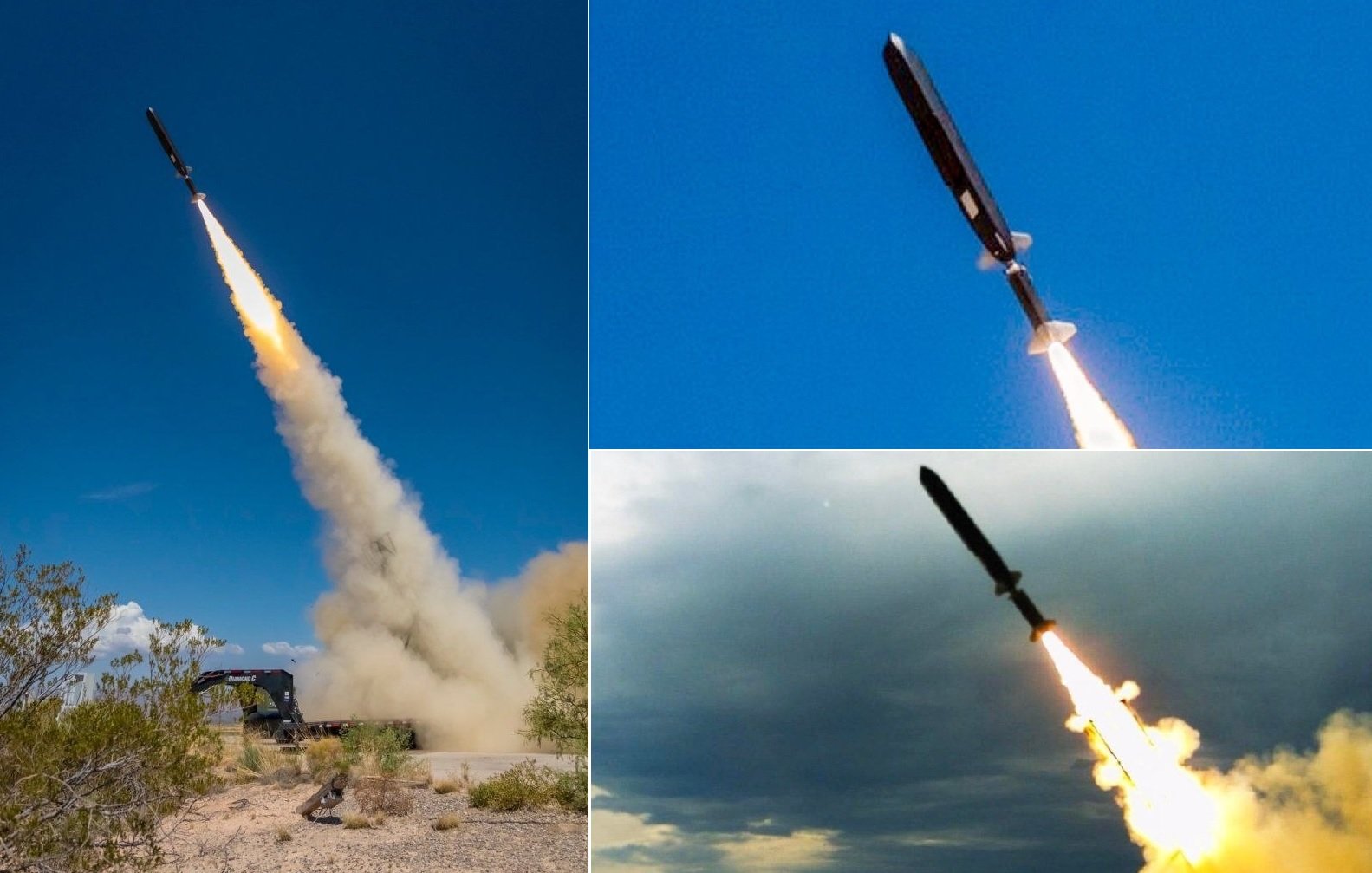
CALIFORNIA, — U.S. defense company Zone 5 Technologies has demonstrated a ground-launched version of its AGM-188A Rusty Dagger cruise missile, introducing a new configuration designated Block 40. The upgraded variant adds ground and sea launch capabilities to a missile previously designed primarily for aircraft deployment. The new configuration was revealed through images shared with defense publication The War Zone on October 22. The missile was developed under the U.S. Air Force’s Extended Range Attack Munition (ERAM) program, which focuses on affordable, mass-producible cruise missiles, initially to meet Ukraine’s requirements. Block 40 Adds Ground and Sea Launch Capabilities The main change in the Block 40 configuration is the addition of a solid-fuel rocket booster at the rear of the missile. This allows it to launch from ground-based and sea-based platforms while retaining its ability to be deployed from aircraft. Zone 5 has confirmed that the missile is certified for four fighter types, including the F-16. It can also be launched from special pallets carried by military transport aircraft. The upgraded missile can carry warheads weighing 100 to 250 pounds (approximately 45 to 113 kg), compared with the previously stated maximum of about 45 kg. Visible changes include more rounded tail stabilizers, while further design modifications have not been publicly detailed. An autonomous visual navigation system was previously announced for the Rusty Dagger, but its integration into the earlier Block 20 version was not confirmed. It remains unclear whether Block 40 introduces this capability. Range Depends on Launch Conditions The AGM-188A Rusty Dagger has a reported maximum range of approximately 930 kilometers under favorable conditions, including a high-speed, high-altitude aircraft launch and a lighter warhead. For low-altitude aerial launches, the previously reported range is up to 300 nautical miles, or approximately 555 kilometers. The ground-launched Block 40 is expected to have a shorter range than the maximum air-launched configuration because it must use its booster to reach cruising conditions. However, the company has not released exact range figures for the new variant. Ukraine Deployment and Production Expansion The Rusty Dagger was developed under the ERAM program primarily to meet Ukraine’s needs. Deliveries under the program were scheduled to begin in October 2026, although the extent of completed deliveries has not been confirmed. Russian forces have reportedly recovered debris matching the missile following precision strikes in Ukraine. Zone 5 has acknowledged the weapon’s deployment and stated that the Rusty Dagger is the only publicly reported operational missile of its class in service with Ukrainian forces. Zone 5 says it developed the surface-launch configuration in less than three months, moving from design to demonstration. The company has also confirmed that versions of the missile have been selected for separate U.S. Army and U.S. Navy programs focused on affordable strike weapons. Production is expanding at facilities in California and Texas, with additional capacity planned in Ohio. Each facility is designed to support annual production of more than 2,500 missiles by the end of 2027, according to the company. The Block 40 demonstration expands the Rusty Dagger’s launch options beyond aircraft, potentially allowing the missile to be deployed from land and sea platforms. Further details about testing, performance and future deliveries of the new configuration have not been publicly disclosed.
Read More → Posted on 2026-10-24 13:57:14
U.S
SAN DIEGO, — The U.S. Navy’s Arleigh Burke-class guided-missile destroyer USS Pinckney (DDG 91) has become the first destroyer to enter Phase Two of the DDG MOD 2.0 modernization program. The work is being carried out at a General Dynamics NASSCO drydock in San Diego following the ship’s eight-and-a-half-month deployment to the Middle East and Pacific. The modernization includes Raytheon’s AN/SPY-6(V)4 radar and Lockheed Martin’s Aegis Combat System Baseline 10. The radar will replace the ship’s existing AN/SPY-1D(V) system, improving its ability to detect and track air and surface threats while supporting air and ballistic missile defense. The work is covered by a $149.6 million contract awarded to General Dynamics NASSCO and is scheduled for completion by September 2028. SPY-6 Radar and Cooling System Upgrades The AN/SPY-6(V)4 radar uses four fixed array faces, each containing 24 Radar Modular Assemblies, for a total of 96 modules. Designed for Flight IIA destroyers, the configuration is intended to operate within their existing power capacity and provide 360-degree situational awareness. Combined with Aegis Baseline 10, the radar is designed to improve the ship’s ability to respond to multiple threats, including ballistic, hypersonic and cruise missiles, as well as other airborne and surface threats. The modernization also includes the Navy’s High Efficiency Super-Capacity (HESC) air conditioning plants to support the increased cooling requirements of the upgraded systems. USS Pinckney is reported to be the first U.S. Navy ship to receive both the SPY-6(V)4 radar and HESC plants. Raytheon began manufacturing radar modules for Pinckney in early 2024. In August 2026, a test array was installed at the Navy’s Surface Combat Systems Center on Wallops Island, Virginia, for shore-based integration and testing before installation aboard the ship. Capt. Tim Moore, program manager for DDG MOD 2.0, said the modernization would equip Pinckney with an integrated sensor suite designed to support U.S. maritime superiority for decades. DDG MOD 2.0 Upgrade Program The DDG MOD 2.0 program is a major mid-life modernization effort for selected Arleigh Burke-class destroyers, intended to bring Flight IIA ships closer to the capabilities of newer Flight III vessels. The broader effort covers approximately 20 ships, with an estimated total cost of $17 billion. During Phase One, four destroyers received the SLQ-32(V)7 Surface Electronic Warfare Improvement Program (SEWIP) Block III electronic warfare suite. USS Pinckney completed this work first, followed by USS Chung-Hoon (DDG 93), USS James E. Williams (DDG 95) and USS Halsey (DDG 97). The initial work also included modifications to accommodate the electronic warfare arrays. These four destroyers form an initial group for evaluating the modernization process. The Navy plans to combine electronic warfare and radar upgrades into a single shipyard period for future ships to reduce the time they spend out of service. USS Sterett (DDG 104) is expected to be among the first destroyers to receive the combined upgrades. Supporting Fleet Operations USS Pinckney returned from its deployment on August 9, 2026, after operating in the Middle East and Pacific since late November 2025. According to the Navy, the destroyer validated several advanced warfare capabilities in operational environments during the deployment. The upgrades come as U.S. Navy destroyers face growing demands in the Indo-Pacific and Middle East, where they help protect carrier strike groups, commercial shipping and allied assets against increasingly capable missile and drone threats. The installation of the SPY-6 radar, Aegis Baseline 10 and upgraded cooling systems is intended to strengthen the ship’s detection and combat capabilities. The experience gained from USS Pinckney and the other initial ships will also help the Navy improve the efficiency of future modernization work across its destroyer fleet.
Read More → Posted on 2026-10-24 13:54:34
World
KOMSOMOLSK-ON-AMUR, Russia, — Russia has launched the Project 20380 corvette Grozny at the Amur Shipbuilding Plant, marking another step in the Russian Navy’s effort to strengthen its Pacific Fleet. The vessel is the fifth Project 20380 corvette built at the shipyard for the fleet. The launch ceremony was attended by Pacific Fleet Commander Admiral Viktor Liina and Khabarovsk Krai Governor Dmitry Demeshin. The event also marked the 88th anniversary of Khabarovsk Krai. Shipyard worker Margarita Borovaya followed naval tradition by breaking a bottle against the ship’s hull. Grozny Moves Towards Completion Construction of Grozny began on August 23, 2021, under construction number 2105. The corvette has been assigned hull number 551. Slipway assembly has been completed, and the vessel has been transferred to the outfitting berth for further work. It was subsequently moved to the Amurets floating dock for launch. The ship will undergo sea trials and state trials before delivery to the Russian Navy. According to Admiral Liina, the crew has already been formed and began training on October 5, 2026. After completing their training, the personnel will work alongside shipyard staff on the remaining construction and preparation activities. Grozny is expected to enter service with the Pacific Fleet in the coming years. The four earlier Project 20380 corvettes built at Amur Shipyard for the Pacific Fleet are Sovershenny, Gromkiy, Geroy Rossiyskoy Federatsii Aldar Tsydenzhapov and Rezkiy. All four serve with the 44th Anti-Submarine Ship Brigade based in Vladivostok. Grozny is expected to join the same brigade after completing its trials. Another Project 20380 corvette, Bravyy, is under construction at the shipyard, with delivery planned for 2027. Project 20380 Corvette Capabilities Designed by the Almaz Central Marine Design Bureau, Project 20380 corvettes, also known as the Steregushchiy class, are multipurpose warships intended primarily for coastal and near-sea operations. Their missions include anti-surface and anti-submarine warfare, air defence, patrol duties, escort missions and artillery support for amphibious landings. The class features a steel hull and composite superstructure designed to reduce radar signature. Key specifications include: Length: 104.5 metres Beam: 13 metres Average draft: 3.7 metres Full-load displacement: Approximately 2,200–2,250 tonnes Maximum speed: 27 knots Range: Approximately 3,500–4,000 nautical miles at 14 knots Endurance: 15 days Crew: 99 personnel, including 14 officers The corvette’s main armament includes the Uran anti-ship missile system with eight Kh-35 missiles, the Redut air-defence system, a 100 mm A-190 naval gun, two 30 mm AK-630M close-in weapon systems and the Paket-NK anti-submarine and anti-torpedo complex. Grozny also has a flight deck and hangar designed to accommodate one Ka-27 helicopter, which can support anti-submarine warfare and reconnaissance missions. Amur Shipyard's Role in the Pacific Fleet The Amur Shipbuilding Plant, part of the United Shipbuilding Corporation, is an important supplier of warships for Russia’s Pacific Fleet. The shipyard has delivered 99 submarines and more than 100 surface ships over its history. The launch of Grozny continues the shipyard’s contribution to the construction of smaller surface combatants for Russia’s Far East. Further equipment installation, completion work and testing will be required before the corvette can enter operational service.
Read More → Posted on 2026-10-24 13:45:26
U.S
WASHINGTON, — The U.S. Department of Defense (Pentagon) has selected nine defense companies to supply approximately 60,000 one-way attack drones under the second phase of its Drone Dominance Program, known as Gauntlet II. The program aims to expand domestic drone manufacturing and equip U.S. forces with affordable unmanned systems. Gauntlet II was conducted over a month in August 2026 at Fort Carson, Colorado. The Defense Innovation Unit (DIU) and the Test Resource Management Center managed the evaluation. Nineteen companies advanced to the event following an earlier qualification process involving 49 companies, while an initial pool of 25 vendors was reported for the selection process. Nine Companies Selected The order is divided between two categories: Deep Strike, for longer-range missions, and Close Quarters Battle, for shorter-range operations in confined environments. The boundary between the categories is approximately 15 kilometers. Perennial Autonomy, manufacturer of Hornet drones, ranked first in Deep Strike with 80.1 points and is set to receive 8,000 drones. Neros, which produces first-person-view (FPV) drones, including the Archer series, ranked first in Close Quarters Battle with 88.1 points and third in Deep Strike. As the only company among the leading performers to qualify in both categories, Neros is allocated 14,000 drones. The reported allocations are: Category Company Drones Deep Strike Perennial Autonomy 8,000 Deep Strike Hyperscale 7,000 Deep Strike Neros 6,000 Deep Strike Skycutter 5,000 Deep Strike Swarm Defense Technologies 4,000 Close Quarters Battle Neros 8,000 Close Quarters Battle ORQA US 7,000 Close Quarters Battle XTEND Reality 6,000 Close Quarters Battle Vector 5,000 Close Quarters Battle ModalAI 4,000 The maximum allocation is 8,000 drones per company in a single category, or 14,000 for a company selected in both. Final contract quantities will be confirmed when the awards are issued. The evaluation tested find-fix-finish missions, requiring operators to locate, confirm and strike targets during day and night operations. The program also assesses performance, manufacturing readiness and supply-chain compliance. Its requirements include U.S.-aligned supply chains and restrictions on components from certain countries, including a reported requirement to exclude Chinese-manufactured parts. Pentagon Plans Further Drone Procurement The Pentagon is adopting an incremental procurement strategy rather than building large stockpiles of systems that could quickly become outdated. Lessons from conflicts such as the war in Ukraine, where drone technology and electronic warfare tactics continue to evolve, are influencing the development and testing of new systems. The first phase of the program resulted in orders for approximately 30,000 one-way attack drones. The overall initiative has a planned investment of around $1.1 billion and aims to acquire more than 200,000 small drones by 2027, while building domestic manufacturing capacity for rapid production. A further selection stage is planned for reusable bomber drones. Phase III, opened in late September 2026, has an allocation of $450 million and targets approximately 60,000 additional drones, with an option for more units. It focuses on manufacturing scalability, higher production rates and performance in contested environments. The phase also sets target prices of $3,000 for Close Quarters Battle drones and $5,000 for Deep Strike drones. Through successive procurement rounds, the Pentagon aims to increase drone availability while allowing manufacturers to improve their systems as operational requirements and technology change.
Read More → Posted on 2026-10-24 13:35:35
U.S
ANDERSEN AIR FORCE BASE, Guam, — The U.S. Army has activated the 3rd Battalion, 43rd Air Defense Artillery Regiment on Guam, establishing a permanent air and missile defense unit to strengthen the island’s protection and support U.S. military operations across the Indo-Pacific. The activation ceremony took place at Andersen Air Force Base. The battalion falls under the 38th Air Defense Artillery Brigade and the 94th Army Air and Missile Defense Command. It replaces Task Force Talon, which deactivated in July 2026 after more than a decade of air defense operations on the island. The battalion will provide the Army’s contribution to the broader Guam Defense System, with responsibilities that include maintaining readiness and integrating sensors, command-and-control systems, launchers and interceptors into a coordinated defensive network. Lt. Col. Joshua Urness, the battalion commander, said soldiers had developed the procedures, relationships and integration needed to connect these systems and support a unified defensive architecture. He described the activation as an important step in establishing the Army’s permanent contribution to Guam’s strategic defense. Col. Moseph Sauda, commander of the 38th Air Defense Artillery Brigade, told soldiers that their vigilance would have strategic consequences, their readiness would help shape regional stability, and their professionalism would contribute to maintaining security. From Task Force Talon to a Permanent Unit Task Force Talon established a dedicated air defense presence on Guam in 2013 to operate the Terminal High Altitude Area Defense (THAAD) system, which is designed to intercept incoming ballistic missiles during the later stages of flight. The task force worked with the Guam Army National Guard and other military services to maintain operational readiness. Its deactivation in July 2026 marked the end of the temporary task force structure, with the new battalion carrying forward its operational experience in a permanent formation. The battalion is expected to support a layered defense involving THAAD, Patriot and the Indirect Fire Protection Capability (Enduring Shield). These systems are intended to address different threats, including ballistic missiles, cruise missiles, aircraft and drones. Earlier reporting indicated that approximately 120 soldiers had been assigned to the battalion on Guam, in addition to existing THAAD personnel. Guam’s Strategic Role in Indo-Pacific Defense Guam is a key U.S. military hub supporting joint operations across the Indo-Pacific. Its air and missile defenses are intended to protect the military personnel, facilities and infrastructure required to sustain those operations. The establishment of a permanent battalion reflects the U.S. Army’s focus on maintaining sustained, integrated air and missile defense capabilities in the region amid security concerns involving China and North Korea. The unit also preserves the historical lineage of the 43rd Air Defense Artillery Regiment, whose predecessor organization was established in the Philippine Islands in 1916.
Read More → Posted on 2026-10-24 13:29:18
U.S
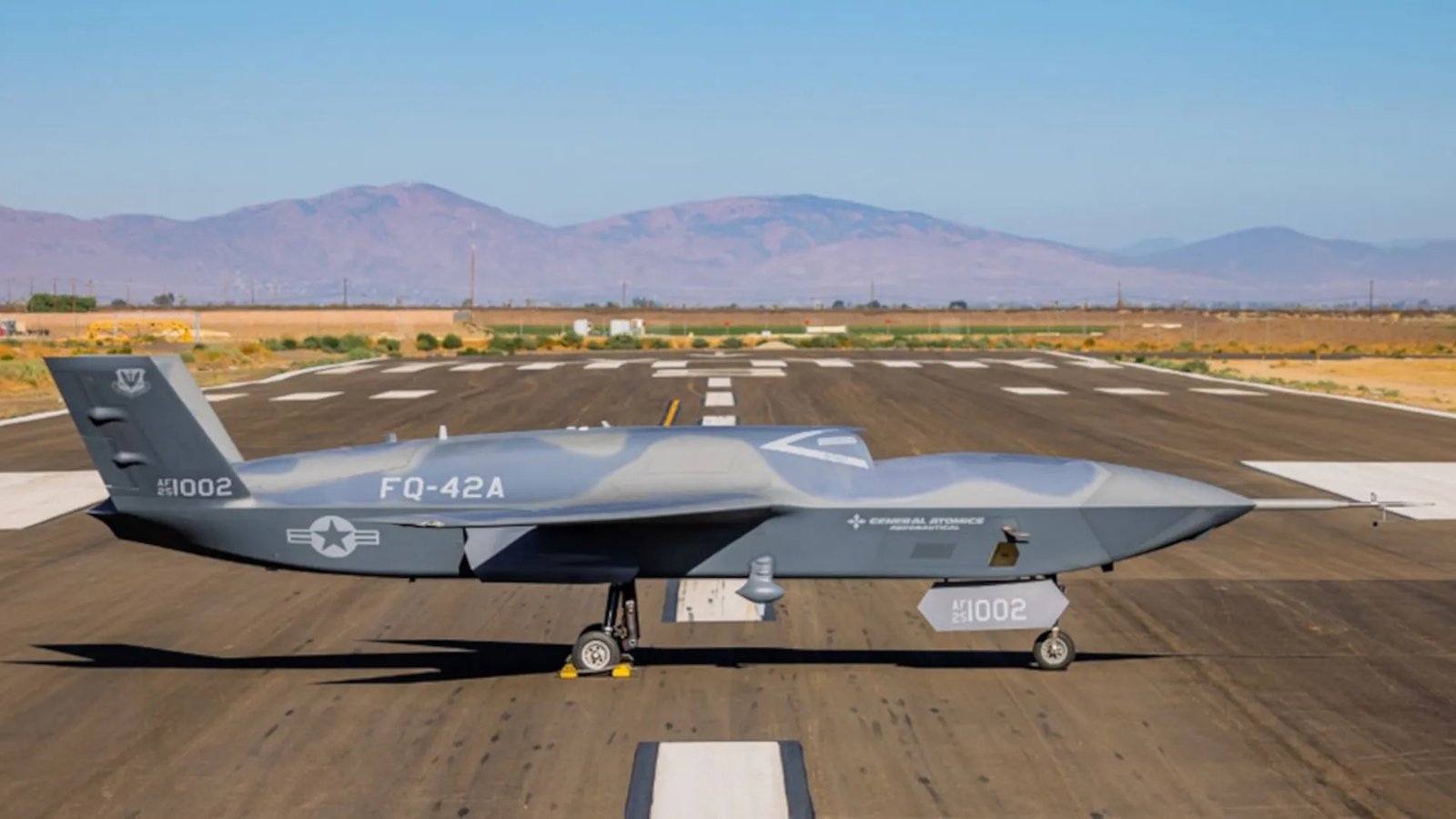
SAN DIEGO, — General Atomics Aeronautical Systems, Inc. (GA-ASI) has partnered with Spirit Defense, a Boeing company, to expand production of the U.S. Air Force’s FQ-42 Vengeance uncrewed fighter under the Collaborative Combat Aircraft (CCA) programme. Spirit Defense will design and manufacture fuselages for the aircraft, adding engineering and manufacturing capacity as GA-ASI prepares to increase production. The partnership follows the Air Force’s June 2026 production contract award to GA-ASI. The aircraft received the Vengeance name in September 2026. GA-ASI President David R. Alexander said the company had established its design, development and manufacturing capabilities for the FQ-42, and that the agreement would increase capacity and improve production resilience by reducing reliance on a single manufacturer. Spirit Defense President and CEO Keith Schrader said the company would contribute its manufacturing expertise to the programme. The company has renovated a 50,000-square-foot facility to support fuselage production. Specific production quantities and delivery schedules for its work have not been disclosed. Founded in 1992, GA-ASI has traditionally manufactured its own uncrewed aircraft. Its portfolio includes the MQ-9A Reaper, MQ-1C Gray Eagle, MQ-20 Avenger, MQ-9B SkyGuardian and MQ-9B SeaGuardian. GA-ASI has stated that it can produce six FQ-42 aircraft per month and has additional manufacturing space available. FQ-42 Development and CCA Programme The FQ-42 is designed to operate alongside crewed fighter aircraft as part of the Air Force’s CCA programme. The Air Force selected GA-ASI’s FQ-42 Vengeance and Anduril Industries’ FQ-44 Fury for initial production under Increment 1. The programme has an initial target of 150 uncrewed fighters by 2030, with a longer-term objective of acquiring up to 500 aircraft. Air Force officials have also stated a goal of fielding at least 500 CCAs by 2032. The YFQ-42A prototype completed its first flight in August 2025. In September 2026, the Air Force received an FQ-42 at Creech Air Force Base, Nevada, for further testing and evaluation. The aircraft has also flown in formation with F-35 and F-15E fighters in preparation for collaborative operations. The FQ-42 features a modular design that allows mission systems to be replaced and new autonomy software to be integrated. According to GA-ASI, its software architecture has been validated through live flight tests across multiple airframes to support human-machine teaming. The aircraft also has an internal weapons bay and design features intended to reduce its radar signature. The Vengeance draws heavily on GA-ASI’s Gambit family of modular combat aircraft, which uses a common core chassis demonstrated through the XQ-67A Off-Board Sensing Station. International Gambit Opportunities GA-ASI is also discussing its Gambit family with international military customers. Drawing on development work involving the FQ-42, XQ-67A and MQ-20 Avenger, proposed variants are designed for electronic warfare, suppression and destruction of enemy air defences (SEAD), and stand-off precision strikes. International customers could participate in manufacturing and integrate their own sensors, weapons and proprietary combat technologies. The Spirit Defense agreement expands the industrial base supporting the FQ-42 as the Air Force advances its CCA programme. However, the number of fuselages Spirit Defense will produce and its delivery schedule remain undisclosed.
Read More → Posted on 2026-10-24 13:06:52
World
PRAGUE, — Czech defence manufacturer KBP International has unveiled its new GRYF unmanned aircraft, designed to carry interceptor drones and lightweight missiles to engage hostile unmanned aerial vehicles (UAVs). The system was presented at the 16th Future Forces Forum at PVA Expo Prague in the presence of Czech President Petr Pavel and military officials. GRYF Designed for Long-Endurance Counter-Drone Operations Unlike conventional strike drones, GRYF operates as a flying weapons carrier that can remain airborne for extended periods and deploy counter-drone interceptors against incoming threats. The platform is intended to support a layered air defence approach by positioning interceptors near protected areas. According to specifications provided by the manufacturer, GRYF has an endurance of up to 12 hours, an operational range of 500 kilometres and a cruising speed of 150 km/h. It is powered by a four-cylinder internal combustion piston engine. The aircraft features four hardpoints and a maximum payload capacity of 50 kg, allowing it to carry lightweight interceptor missiles weighing approximately 5 kg each. At the Prague exhibition, KBP displayed GRYF in two configurations: one equipped with small interceptor missiles and another carrying interceptor drones. Its modular design allows operators to change payloads according to mission requirements. Focus on Cost-Effective Air Defence KBP presented GRYF as a potential solution to the growing demand for more affordable counter-drone capabilities. By remaining on patrol near critical infrastructure, the aircraft can position interceptors to engage hostile drones, potentially reducing the cost per engagement compared with conventional ground-based air defence missiles. Its airborne deployment concept could also extend defensive coverage beyond the reach of fixed launch sites. KBP Expands Drone Manufacturing Capabilities GRYF builds on KBP Group’s more than 30 years of experience in composite aircraft structures. The company manages the design and manufacturing of unmanned aircraft, piston aero engines and key structural components in-house, covering processes from initial design and prototyping to series production. KBP is expanding its production facilities to increase manufacturing capacity for its own products and support cooperation with other European aerospace and defence companies. TARON and SABRE Also Presented Alongside GRYF, KBP introduced two other unmanned aircraft at the exhibition. The TARON is a piston-powered target and one-way attack drone with an endurance of 30 minutes, a range of 70 kilometres and a maximum flight altitude of 1,500 metres. The SABRE is a jet-powered drone designed for high-speed operations. It can reach speeds of 400 km/h, has a range of 400 kilometres and carries a payload of 30 kg. It is designed for launch from mobile catapults to support flexible field operations. KBP International served as a main partner of the 16th Future Forces Forum, which ran from October 21 to 23, 2026, bringing together approximately 530 exhibitors and official delegations from 65 countries. The company has not yet announced production timelines or initial customers for the GRYF system. Main Sourec : Militarnyi
Read More → Posted on 2026-10-23 17:01:15
World
RIYADH, Saudi Arabia, — Saudi Arabia appears to be expanding its al-Duwadimi ballistic missile complex to support the production of larger solid-fuel missiles capable of carrying heavier payloads or reaching longer distances, according to satellite imagery analysis by researchers at the US-based Foreign Policy Research Institute (FPRI), reported by Reuters. Researchers Sam Lair and Michael Duitsman examined images from US-based Planet Labs covering April 2025 to September 2026. The complex is located approximately 200 kilometres (125 miles) west of Riyadh. New Facility for Missile Production The imagery shows a new building at least twice the size of the existing facility believed to contain missile motor casting pits. Construction began with ground clearing and excavation in April 2025. Images from December 12, 2025, showed two deep pits inside the unfinished structure, while images from September 18, 2026, showed heavy-duty blast-diverting walls installed on either side, with the roof still partly unfinished. Researchers assess that the pits are used to pour solid-propellant mixtures into missile motor casings, where the material hardens. The protective walls are designed to direct accidental explosions away from nearby structures. A second new building may be intended for storing propellant ingredients or finished missile components. The researchers estimate that production could begin by the end of 2026, although installing specialised equipment may take several additional months. 🇸🇦 Saudi Arabia appears to be expanding its ballistic missile factory to build larger solid-fuel missiles, according to researchers who analyzed commercial satellite images, Reuters reports. Images taken between April 2025 and September 2026 show a new building at the al-Duwadimi complex, about 200 km (125 miles) west of Riyadh, at least twice the size of the existing facility and likely used for casting missile motors. A second new building may store fuel ingredients or finished components. Researchers Sam Lair and Michael Duitsman of the Foreign Policy Research Institute said the expansion would let the kingdom produce missiles with longer ranges or heavier payloads, and the facility could start production as early as the end of 2026. — Military Summary (@MilitarySummary) October 23, 2026 Possible Chinese Missile Technology Solid-fuel missiles can be stored for long periods and prepared for launch more quickly than liquid-fuel systems. Saudi Arabia acquired approximately 40 Chinese DF-3 liquid-fuel ballistic missiles in 1987, according to a declassified 1991 CIA estimate. Two were publicly displayed during a military parade in 2014. Lair and Duitsman have also identified what they assessed as wreckage in Yemen from a Chinese-designed DF-15 solid-fuel ballistic missile fired by Saudi forces. Lair said Saudi Arabia may already be manufacturing the DF-15 and assessed that the expanded facility could support production of the longer-range DF-21 or a comparable system. However, the satellite imagery does not confirm which missiles the facility will produce. Strategic Implications The expansion comes as Saudi Arabia seeks greater self-reliance in defence manufacturing. Longer-range missiles could strengthen its ability to deter potential threats from Iran and support military operations involving Yemen's Houthi forces. The development could also influence regional security and discussions over a proposed US-Saudi civilian nuclear cooperation agreement. Some US lawmakers have raised concerns about potential weapons-proliferation risks associated with nuclear cooperation, while Saudi Arabia denies pursuing a nuclear weapons programme. The United States has long restricted exports of longer-range missile systems, contributing to Saudi Arabia's historical reliance on China for such capabilities. The Saudi embassy in Washington and the kingdom's Information Ministry did not respond to requests for comment, according to Reuters. The findings are based on open-source satellite imagery and researchers' assessments; the exact missile types, production capacity and operational timeline remain unconfirmed.
Read More → Posted on 2026-10-23 16:49:51
India
NAGPUR, India, — Solar Defence and Aerospace Ltd. (SDAL) has begun delivering its indigenous Nagastra-2 anti-tank loitering munition system to the Indian Army following successful technical trials at the Mahajan Field Firing Range (MFFR) in August 2026. During the trials, the system’s operational performance and compliance with Electronic Counter-Countermeasures (ECCM) requirements were evaluated. Nagastra-2 Capabilities Designed for precision strikes against armoured targets, Nagastra-2 carries a 4 kg tandem shaped-charge warhead capable of penetrating up to 650 mm of Rolled Homogeneous Armour (RHA). It offers an operational range of 25 km in recover-and-reuse mode and 50 km in fire-and-forget mode, with an endurance of up to 60 minutes. The system features day-and-night electro-optical/infrared (EO/IR) surveillance cameras to support target observation and engagement. It also uses encrypted video and telemetry links and incorporates an ECCM suite designed to improve resilience against electronic warfare threats, including communication jamming, GPS jamming and spoofing. Testing and Indigenous Manufacturing Before delivery, the system was also tested in different operational environments, including high-altitude conditions in Ladakh and the plains of Babina, Uttar Pradesh. Manufactured at SDAL’s Nagpur facility, Nagastra-2 is part of India’s efforts to expand domestic defence manufacturing and develop indigenous precision-strike systems. Previous Nagastra-1R Deliveries The latest delivery follows the Indian Army’s 2025 order for approximately 450 Nagastra-1R loitering munitions under emergency procurement. SDAL delivered these systems in mid-October 2026. The Nagastra-1R features a reusable launcher system, a 360-degree gimbal camera with an optional thermal camera for night operations, encrypted video and telemetry communications, and a reported 2-metre Circular Error Probable (CEP). The company has stated that the Nagastra-1R contains more than 80% indigenous components. According to SDAL, Nagastra-2 adds another system to its loitering munition portfolio for the Indian Army, supporting precision engagement of armoured targets and the development of Made-in-India defence technologies.
Read More → Posted on 2026-10-23 16:36:21
U.S
EL SEGUNDO, California, — The U.S. Space Force has awarded its first operational contracts under the Commercial Augmentation Space Reserve (CASR) programme to six companies providing satellite tracking and space surveillance capabilities during military crises and periods of increased demand. The selected companies are Anduril, LeoLabs, Slingshot Aerospace and InTrack of the United States, EOS Space Systems of Australia, and NorthStar Earth & Space of Canada. The contracts were awarded through the ACCESS framework, used by Joint Commercial Operations (JCO) to procure commercial data and data-fusion services. Space Surveillance Capabilities The contracts focus on Space Domain Awareness (SDA), including tracking satellites, monitoring orbital manoeuvres, and identifying space debris and spacecraft breakups. The companies will provide commercial data and services to support JCO activities during routine operations and periods of increased demand. CASR is modelled on the U.S. Air Force’s Civil Reserve Air Fleet (CRAF), which uses commercial aircraft to supplement military airlift during national emergencies. Developed since 2022, CASR allows the military to expand its use of commercial space capabilities without owning and maintaining all the required infrastructure. The programme has three operational levels: day-to-day operations for routine monitoring, priority operations during regional conflicts, and full CASR execution during major international crises or war. From Pilot Phase to Operational Contracts A pilot programme began in 2025, when four space domain awareness companies received 90-day contracts worth a combined $1.1 million. The Space Force subsequently conducted wargames and training exercises to test the integration of commercial data and services into military operations. The new contracts move CASR into its operational phase for space domain awareness. All six companies already work with the Joint Commercial Operations Cell, which integrates commercial space data and shares it with U.S. military and international partners. Lt. Col. Brandon Galindo said operators consider these companies trusted sources when additional tracking is required, including after an on-orbit event that generates debris. Col. Timothy Trimailo, director of the Space Systems Command’s Commercial Space Office, said the programme integrates established commercial capabilities into government systems when additional capacity is needed. The selection process assessed commercial offerings, readiness and integration pathways. The financial values of the new contracts were not disclosed, although officials described the initial amounts as relatively low. Funding may be adjusted as combatant commands identify demand. Future Expansion The vendor pool remains open to additional companies with proven, trusted capabilities. The Space Force is also evaluating future CASR applications in satellite communications, launch services, and spacecraft telemetry, tracking and command. The programme aims to strengthen U.S. space surveillance by combining commercial and government systems. Space Systems Command plans to apply lessons from the initial contracts to future commercial integration. Interested companies can contact the Space Force through its established industry engagement channels.
Read More → Posted on 2026-10-23 16:30:01
World
TEHRAN, Iran, — Iran is continuing restoration work at its Eagle 44 (Oghab 44) underground airbase in southern Hormozgan province following at least three reported rounds of airstrikes against the facility in 2026. Satellite imagery captured by Planet Labs on September 29 shows that runway obstacles have been removed, a new taxiway section has been completed and further construction is underway. Satellite Images Show Restoration Progress Located in the foothills of the Zagros Mountains, approximately 100 miles (160 kilometres) northwest of the Strait of Hormuz, Eagle 44 is operated by the Islamic Republic of Iran Air Force (IRIAF). Its underground tunnels and hangars are designed to shelter aircraft and other military equipment. The main runway measures approximately 2.7 miles (4.3 kilometres). According to The War Zone, the latest imagery shows that the main runway, previously blocked by obstacles, is now clear. A new section of the western taxiway, including its concrete surface, has been completed. Work on the adjoining section is continuing, with compacted, stabilised soil laid but paving still unfinished. Once completed, the second taxiway would provide another connection between the western underground hangars and the main runway. However, craters remain visible near the western tunnel entrances, while two support buildings remain destroyed and a third is damaged. Debris from damaged equipment has also been cleared from taxiway areas. Base Was Targeted Multiple Times in 2026 Eagle 44 was targeted during the conflict that began on February 28, 2026, with further damage reported in late March and around July 15–16. Earlier imagery showed craters near the tunnel entrances, damage to surface infrastructure and obstacles placed along the runway. The Pentagon and U.S. Central Command have not publicly identified Eagle 44 as a specific strike target, and Iran has not acknowledged attacks on the facility. The latest satellite imagery confirms visible surface repairs, but it does not establish the condition of the underground hangars or the equipment stored inside. Iran Unveiled Eagle 44 in 2023 Iranian state media first presented Eagle 44 publicly in February 2023, showing F-4 Phantom fighter jets, drones and missile systems operating from the underground complex. Construction of the tunnel network began around 2013, while work on the main runway started several years later. The restoration comes amid U.S. assessments that Iran's air force has suffered severe losses. U.S. Central Command chief Admiral Brad Cooper told Congress in May 2026 that Iranian air force combat sorties had fallen from between 30 and 100 daily before the campaign to zero. However, the current number and operational condition of Iran's remaining aircraft are unclear. The latest imagery indicates that Iran is prioritising runway clearance and taxiway reconstruction at Eagle 44, although the extent to which the facility can resume full operations remains unknown.
Read More → Posted on 2026-10-23 16:05:33
World
XI’AN, China, — Commercial satellite imagery has revealed four of China’s KJ-3000 airborne early warning and control (AEW&C) aircraft at the Xi’an-Yanliang airfield complex in Shaanxi province, raising the possibility that the programme is moving towards low-rate or serial production. However, the imagery does not confirm that serial production has begun. Four Aircraft Seen at Xi’an-Yanliang The imagery, captured by Vantor on October 5, 2026, and examined by independent analysts, including MizarVision, shows three aircraft near the Xi’an Aircraft Company (XAC) production facilities and a fourth at the nearby China Flight Test Establishment (CFTE). J. Michael Dahm of the Mitchell Institute for Aerospace Studies assessed the sighting as consistent with the programme entering serial production. However, analyst Andreas Rupprecht cautioned that the four aircraft could be previously identified prototypes gathered at the same location. Clearer photographic evidence, including aircraft serial numbers and operational paint schemes, would help establish their production status. CHINA | Four KJ-3000 Radar Aircraft Spotted in New Satellite Imagery New Vantor satellite imagery captured on October 5, 2026, reveals four Chinese KJ-3000 airborne early warning and control (AEW&C) aircraft at Xi’an-Yanliang. Three aircraft are positioned near the Xi’an Aircraft Company production facilities, while a fourth is visible at the nearby flight-test establishment. The presence of four KJ-3000 aircraft raises the possibility that China has entered low-rate or serial production of its next-generation airborne early warning platform. Based on the Y-20B airframe, the KJ-3000 is designed to strengthen long-range surveillance, aerial command and control, and coordination of combat aircraft across the Indo-Pacific. These capabilities could significantly enhance Chinese operations around Taiwan and the South China Sea. However, the imagery does not conclusively establish serial production. All four aircraft could still be previously identified prototypes. Imagery: Vantor Captured: October 5, 2026 Published: October 22, 2026 Analysis: @MizarVision — MizarVision (@MizarVision) October 23, 2026 KJ-3000 Design and Capabilities The KJ-3000 is based on China’s domestically developed Y-20B heavy transport aircraft and is powered by four Chinese-made Shenyang WS-20 turbofan engines. Its design features a large circular radar dome on the upper fuselage and an in-flight refuelling probe above the cockpit. The aircraft is expected to use advanced active electronically scanned array (AESA) radar technology for airborne surveillance and command-and-control missions. Its first flight-testing appearance was reported in December 2024, and two prototypes, identified by numbers 7821 and 7822, had been documented in open sources before the latest satellite imagery. The KJ-3000 is expected to succeed the KJ-2000, which was built using imported Russian Il-76 airframes. Only four KJ-2000 aircraft were completed, making the domestically based KJ-3000 an important development for China’s large airborne early warning fleet. Significance for China’s Air Surveillance China operates approximately 70 airborne early warning and control aircraft, with the smaller, turboprop-powered KJ-500 forming a major part of its fleet. The larger KJ-3000 is intended to strengthen long-range surveillance, aerial command and control, and coordination of combat aircraft. If the programme advances to regular production and service, the aircraft could improve China’s ability to monitor and coordinate air operations across the Indo-Pacific, including areas around Taiwan and the South China Sea. For now, the four aircraft visible in the satellite imagery indicate possible progress in the programme, but further imagery or official confirmation is needed to establish whether serial production has started.
Read More → Posted on 2026-10-23 15:52:10Search
Top Trending in 24 Hours
-
 NASA Demonstrates Space-to-Space Wi-Fi Between Two Orbiting Spacecraft
-
 USS Pinckney Becomes First U.S. Navy Destroyer to Begin Phase Two Modernization with Advanced SPY-6 Radar
-
 General Atomics Partners With Spirit Defense to Expand FQ-42 Vengeance Production
-
 U.S. Military to Ban Chinese Automaker BYD Vehicles from Kadena Air Base in Japan Over Security Concerns
-
 Zone 5 Technologies Demonstrates Ground Launch of Upgraded AGM-188A Rusty Dagger Missile
-
 Russia Launches Project 20380 Corvette Grozny for Pacific Fleet at Amur Shipyard
-
 Israeli Firm Silynxcom Develops AI-Powered Wearable Drone Detection System for Soldiers
-
 Bengaluru Startup FWDA Unveils FWD Supreme AI-Piloted Loyal Wingman Prototype
Top Trending in 4 Days
-
 NASA Sets New Artemis Milestones as SpaceX and Blue Origin Target Moon Landings in 2027–2028
-
NASA Demonstrates Space-to-Space Wi-Fi Between Two Orbiting Spacecraft
-
 Australia Unveils Ghost Shark Autonomous Submarine’s Mine, Drone and Logistics Capabilities
-
 L3Harris Opens ‘Arsenal of Freedom’ Rocket Motor Plant in Arkansas to Double Production Capacity
-
 Unitree Unveils H2-X ‘Kung Fu Legend: Guardian’ Humanoid Robot for Security and Rescue
-
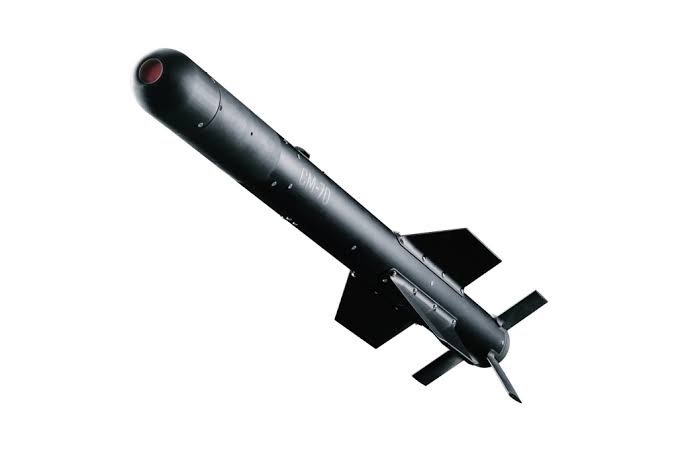 CSG and North Vector Dynamics Sign MoU to Explore European Production of CM-70 Counter-Drone Interceptor
-
USS Pinckney Becomes First U.S. Navy Destroyer to Begin Phase Two Modernization with Advanced SPY-6 Radar
-
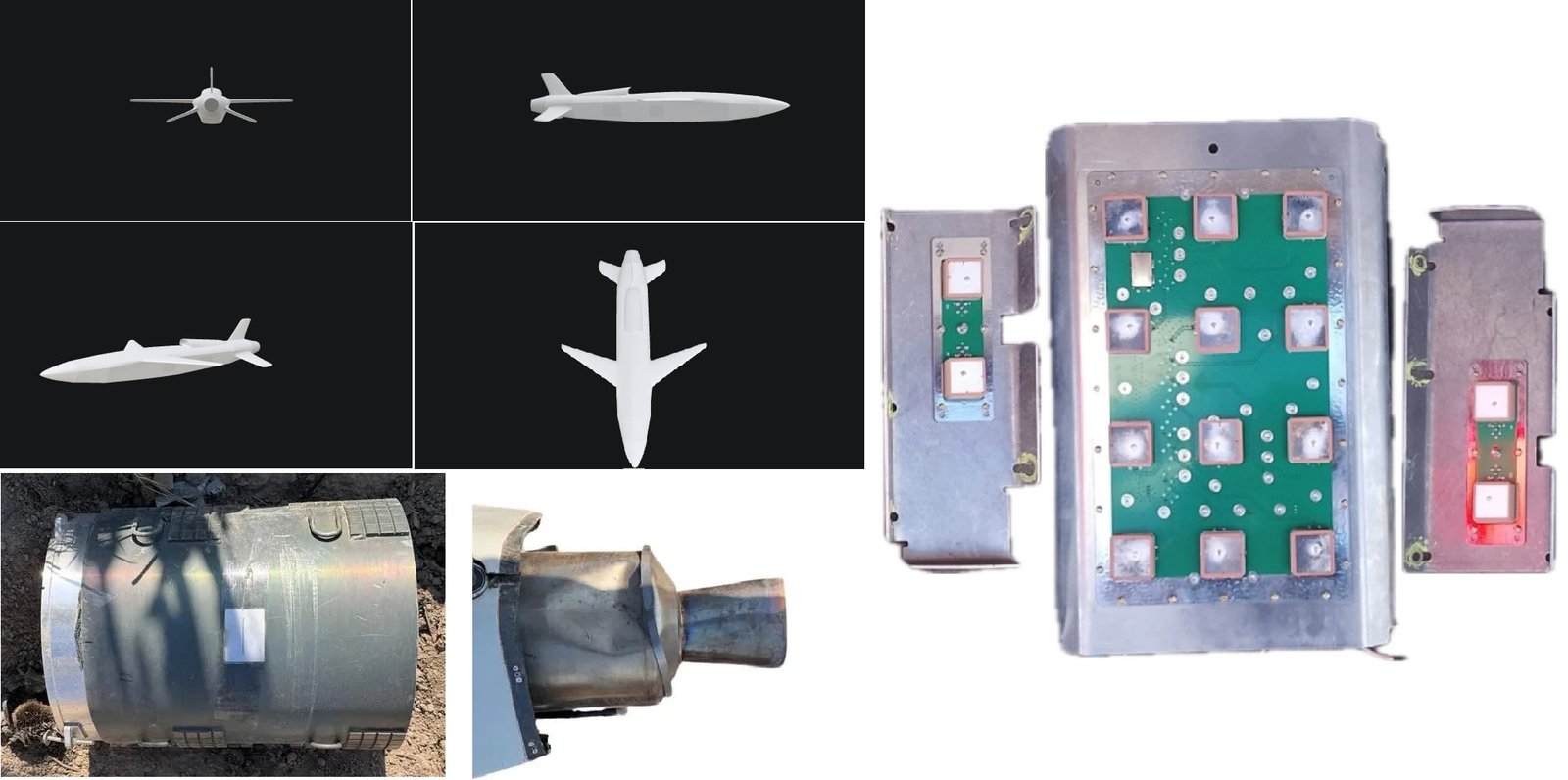 Ukraine Reveals Technical Details of Russia’s New Filin Cruise Missile
